IFB Gaming

Loading

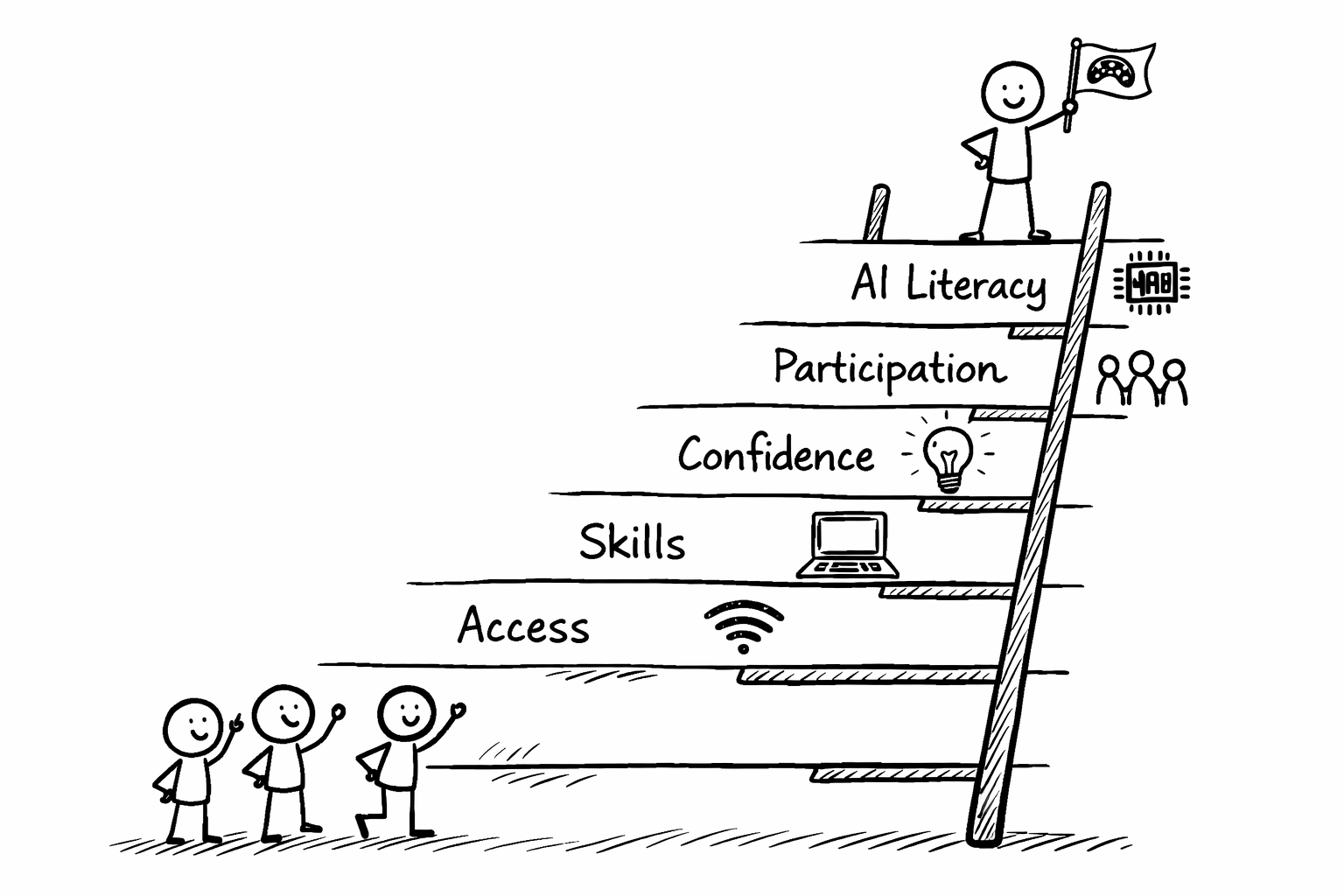
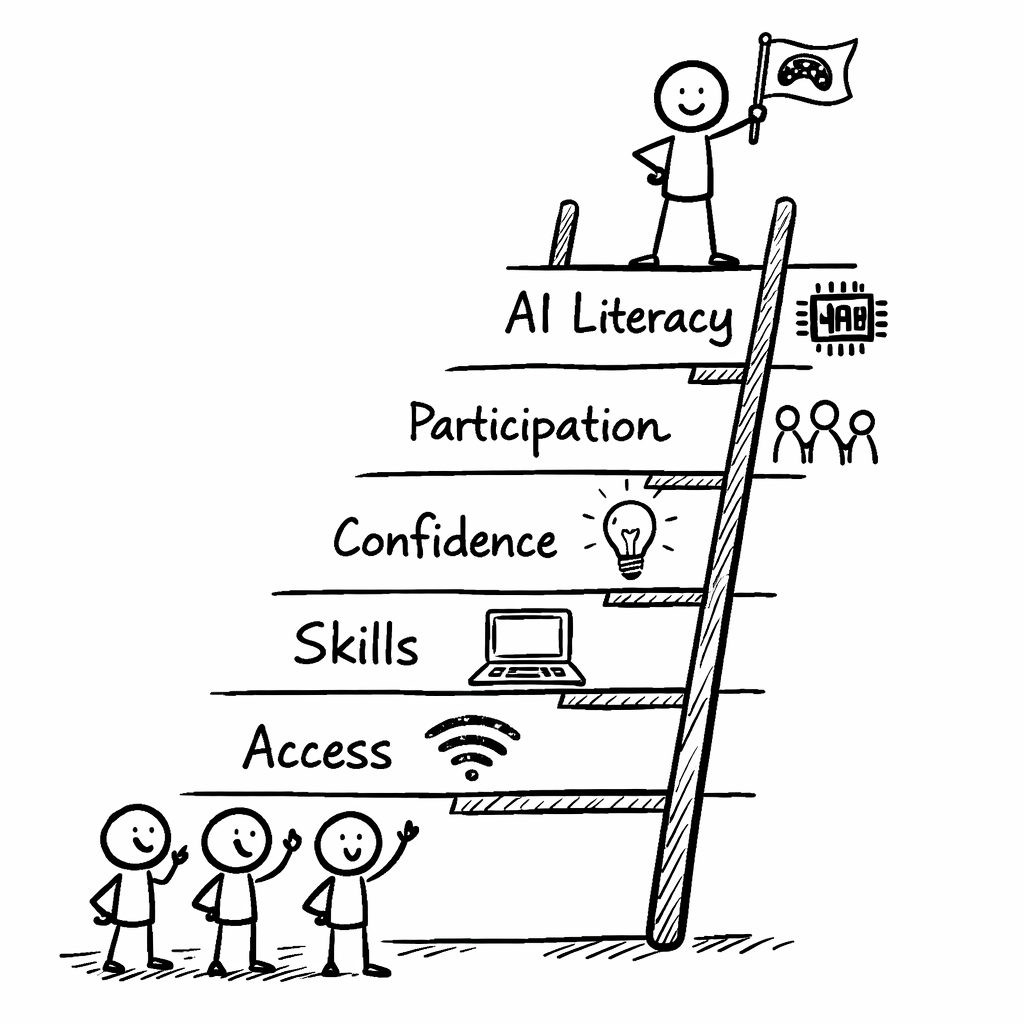
climbing towards digital empowerment

Play, Participation, and Power: Why Gaming Matters for Digital Inclusion

Across the world, gaming is often viewed primarily as entertainment — a pastime enjoyed by millions of players across consoles, personal computers, and mobile devices. Yet gaming is much more than a form of leisure.

At its core, gaming is a powerful system for learning, participation, and problem-solving.

The same principles that make games engaging — curiosity, challenge, progress, responsive feedback, and collaboration — can also be applied to help communities build confidence, develop digital skills, and participate more fully in an increasingly digital society.

At IFB Gaming, we believe that gaming principles can play an important role in shaping the future of digital inclusion and community empowerment.

Let’s break it down.

The Participation Challenge

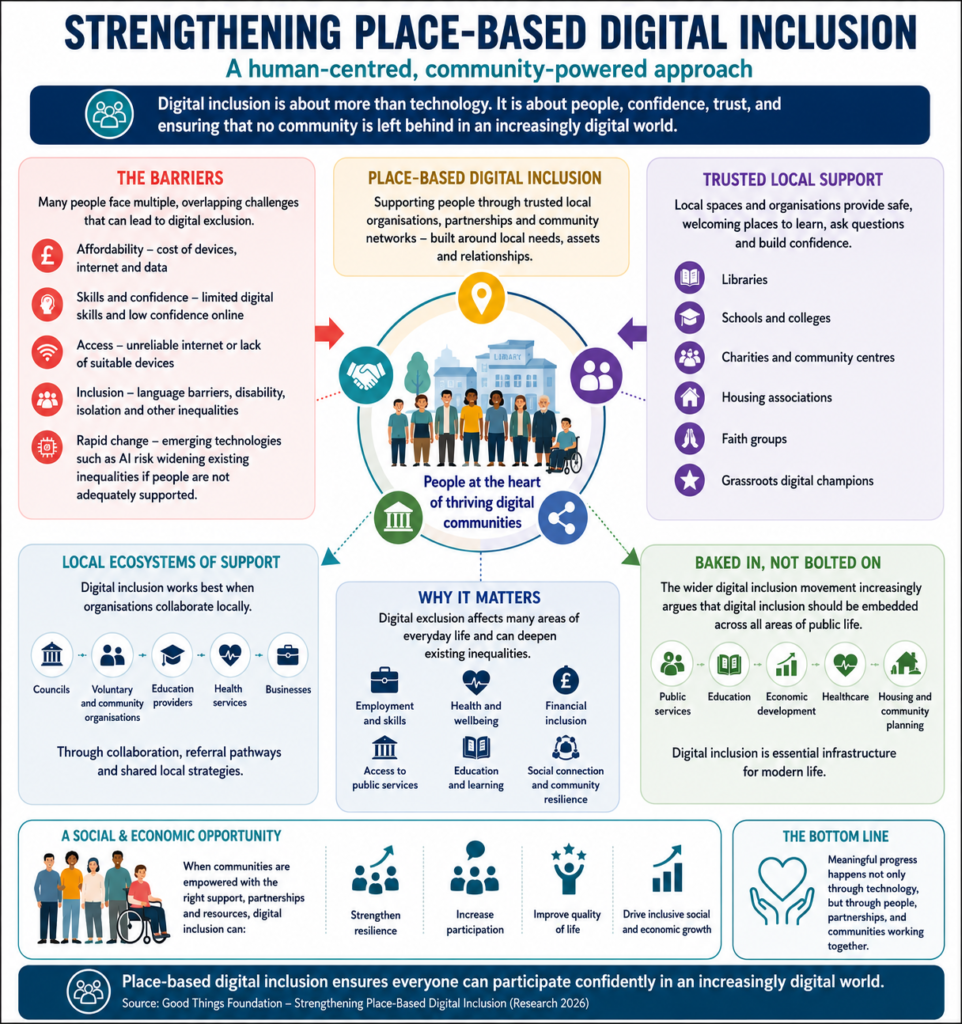
Digital inclusion has traditionally focused on three key challenges:

• access to devices and connectivity
• digital skills and literacy
• confidence using online services

Over the past decade, governments, charities, and community organisations have worked tirelessly to address these barriers. Their efforts have helped millions of people gain access to the internet and develop the skills needed to navigate the digital world.

However, access and skills alone do not guarantee participation.

Many people still feel uncertain, intimidated, or disconnected from digital systems. For some, technology can feel like an unfamiliar environment — one that is difficult to navigate without guidance.

This is where gaming offers an important insight.

Games succeed because they encourage participation rather than demand expertise.

Players are invited to explore, experiment, and progress step by step.

Failure is part of the process, and progress is celebrated.

Learning Through Play

One of the most powerful aspects of gaming is its ability to support learning through play.

Games are designed to introduce new challenges gradually. Players start with simple tasks, build confidence through practice, and unlock more complex challenges as their skills develop.

This structure mirrors effective learning environments.

In digital skills programmes, for example, participants may need to learn how to:

  • create an email account
  • engage through chat
  • navigate online services
  • recognise online risks
  • access digital health services
  • apply for jobs online

When these activities are presented as technical tasks, they can feel intimidating. But when they are structured as missions, levels, or achievements, they become more engaging and motivating.

Gamification — the use of game mechanics in non-game contexts — can therefore transform digital learning into a progressive and confidence-building journey.

Gaming as a Gateway to Digital Confidence

For many people, gaming represents their first interaction with digital environments.

Even simple games introduce players to key digital concepts:

  • navigating virtual spaces
  • solving problems
  • collaborating with others
  • managing digital systems

These experiences can build confidence that extends far beyond gaming itself.

Young people who play games often develop skills in strategic thinking, communication, and problem-solving. Older adults who explore digital games may gain confidence using devices and navigating digital interfaces.

Gaming can therefore act as a gateway into broader digital participation.

Community Engagement Through Gamification

Beyond individual learning, gaming principles can also strengthen community engagement.

Community programmes often struggle with participation. Workshops, meetings, or training sessions may be valuable but difficult to sustain without ongoing motivation.

Gamification can help address this challenge by introducing elements such as:

  • challenges and missions
  • progress tracking
  • collaborative achievements
  • recognition and rewards

These elements encourage participants to remain engaged while celebrating progress and shared achievements.

For example, digital skills programmes can introduce learning pathways where participants unlock new levels as they complete training modules. Community challenges can encourage residents to contribute to local initiatives, share knowledge, or participate in digital learning events.

By transforming participation into a shared journey, gamification can help strengthen community bonds and collective motivation.

Gaming in the Age of Artificial Intelligence

As emerging technologies such as artificial intelligence become embedded in everyday digital systems, the need for inclusive approaches to digital learning will only increase.

AI-powered services are already influencing areas such as:

  • healthcare
  • education
  • employment
  • financial services
  • information access

Understanding these technologies requires more than basic digital skills. Individuals must develop confidence navigating complex digital environments and questioning automated outputs.

Gaming and gamification can play an important role in supporting this transition.

By creating safe, interactive environments where people can explore technology without fear of failure, gaming can help communities build the confidence needed to engage with emerging technologies.

From Entertainment to Empowerment

Gaming is often misunderstood as a purely recreational activity.

Yet when we examine the underlying mechanics of games — exploration, feedback, collaboration, and progression — we see a powerful framework for human engagement and learning.

When these principles are applied thoughtfully, gaming can support:

  • digital inclusion
  • community learning
  • civic participation
  • technology confidence
  • social connection

In this sense, gaming is not simply about entertainment.

It is about empowerment through participation.

The Role of IFB Gaming

At IFB Gaming, our work explores how gaming principles and emerging technologies can support communities in navigating the digital world.

Through initiatives focused on digital inclusion, community learning, and responsible technology engagement, we aim to demonstrate how gaming can become a tool for education, participation, and social impact.

Our work recognises that digital inclusion is not only about providing access to technology.

It is about helping individuals and communities develop the confidence, curiosity, and capability to shape their own digital futures.

Looking Ahead

As society continues to evolve in response to rapid technological change, new approaches to learning and engagement will become increasingly important.

Gaming — with its emphasis on participation, experimentation, and progress — offers a powerful model for how communities can learn and grow together.

By embracing the principles of play, collaboration, and discovery, we can create more inclusive pathways into the digital world.

Because when people feel confident to explore, learn, and participate, they do more than access technology.

They gain the power to shape the future.

AI and the Next Phase of Digital Inclusion: What Communities Need to Know

Artificial Intelligence (AI) is rapidly becoming part of everyday digital life.

From search engines and customer service chatbots to healthcare systems, online learning platforms, and workplace tools, AI is quietly shaping how information is delivered and how decisions are made.

For many people, this shift is exciting. AI promises greater efficiency, smarter tools, and new ways of solving complex problems.

But for communities already facing digital barriers, the rise of AI raises an important question:

What happens when digital inclusion moves into the age of artificial intelligence?

Digital Inclusion Has Entered a New Phase

For many years, digital inclusion efforts focused on three core challenges:

• access to devices and connectivity
• basic digital skills
• confidence using online services

Organisations across the UK and around the world have made enormous progress in helping individuals access the internet and develop the skills needed to participate in a digital society.

However, as AI systems become embedded in digital services, the nature of digital inclusion is beginning to change.

Digital participation will increasingly require people to understand how automated systems generate information, make recommendations, and sometimes make decisions.

This represents a new stage in the digital inclusion journey.

When Digital Services Become AI-Driven

Artificial intelligence is already influencing many services people rely on every day.

Examples include:

  • automated customer service systems
  • job recruitment screening tools
  • recommendation engines on digital platforms
  • AI-powered educational tools
  • decision-support systems in healthcare and finance

While these systems can improve efficiency and accessibility, they also introduce new challenges.

Users may not always understand:

  • where the information is coming from
  • how decisions are being made
  • whether an AI-generated answer is reliable
  • how their personal data is being used

Without the right support, individuals who have recently become digitally included may find themselves facing a new layer of complexity.

The Role of Community Organisations

Community organisations have long played an essential role in supporting digital inclusion.

Libraries, charities, community centres, and local support networks often act as trusted intermediaries between digital systems and the people who use them.

As AI becomes more widespread, these organisations may become equally important in helping communities understand and navigate intelligent technologies.

This could involve helping individuals:

  • understand what AI tools are and how they work
  • recognise AI-generated content
  • verify information produced by automated systems
  • protect personal data when using AI-powered services
  • explore how AI might support learning, employment, or creativity

In this sense, community organisations may increasingly act as AI translators — helping people interact confidently with emerging technologies.

AI Literacy as a Community Skill

Just as digital literacy became a key skill over the past decade, AI literacy may soon become equally important.

AI literacy does not require everyone to become a programmer or data scientist.

Instead, it focuses on helping people understand:

  • what AI can and cannot do
  • how AI systems learn from data
  • where bias or errors might occur
  • how to question and verify automated outputs

This knowledge helps individuals remain informed and confident users of digital systems.

Creating Safe Spaces to Explore AI

One of the most effective ways to support communities in understanding new technologies is through safe, supportive environments where people can explore and ask questions.

Community workshops, digital hubs, and learning programmes can provide opportunities for people to experiment with AI tools while receiving guidance from trusted facilitators.

These environments can help individuals:

  • explore AI-powered tools without pressure
  • understand both the opportunities and risks of AI
  • develop confidence interacting with intelligent systems
  • see how AI might support everyday tasks

The goal is not simply to promote AI adoption, but to ensure that people can engage with technology critically, safely, and confidently.

Looking Ahead

Artificial intelligence will likely continue to transform many aspects of digital life in the years ahead.

As this transformation unfolds, digital inclusion efforts must evolve alongside it.

Ensuring that communities can understand and navigate AI-powered systems will be essential to maintaining equitable access to digital services and opportunities.

At IFB Gaming, we are interested in exploring how emerging technologies like artificial intelligence intersect with community learning, digital inclusion, and the broader digital society.

The future of digital inclusion may not only be about getting people online.

It may also be about helping people understand the intelligent systems that increasingly shape the online world.

Why Digital Inclusion Matters More Than Ever in the Age of AI

A 50-Minute Loaded Remote Executive Lecture on Teams

Artificial intelligence is transforming every aspect of society—from public services and education to employment, healthcare, and everyday life. Yet as AI accelerates, the divide between those who can participate and those who cannot is widening at an alarming rate.

This workshop, delivered by digital inclusion strategist John Adewole, provides leaders, organisations, and practitioners with a clear, compelling understanding of why digital inclusion is now a critical requirement in an AI-enabled world.

About the Workshop

In just 50 minutes, this session offers an evidence-based, insight-driven exploration of how AI is reshaping digital access needs and deepening existing inequalities. Drawing on real community experience and cross-sector practice, highlighting the practical steps every organisation can take to ensure people are not left behind.

The workshop is ideal for:

  • Local authorities and government teams
  • Corporates and digital transformation leaders
  • Housing associations
  • Funders and grant-makers
  • Charities and community organisations
  • Education, skills, and employability providers


What You Will Learn

Participants will gain actionable insights into:

  • How AI adoption is accelerating digital inequality
  • Which groups are being disproportionately affected
  • The essential digital skills required in an AI-driven society
  • Practical, scalable strategies for supporting digitally excluded people
  • Immediate actions your organisation can implement


Why This Matters Now

AI is no longer “emerging”—it is actively shaping the services people rely upon. Without targeted interventions, millions risk being locked out of education, employment, public services, and opportunities for social and economic mobility.

Digital inclusion is not a technical issue; it is a social, economic, and ethical imperative.

About the Facilitator

John Adewole is a recognised leader in digital inclusion, sustainable technology use, and community empowerment. Through IFB Gaming’s Empowering Futures programme, he works directly with underserved groups to improve digital access, skills, and participation. His practical experience, combined with policy-level insight, ensures a workshop that is both grounded and forward-looking.

Book This Workshop

Equip your organisation with the insight, tools, and confidence to navigate the AI era responsibly and inclusively.

Enquire now:
👉 Confirm your attendance

Introduction to AI: Unleashing the Future!

Join us for a Free Community Workshop.

Are you curious about Artificial Intelligence but not sure where to start? Whether you’re a complete beginner or an AI enthusiast, this workshop is your gateway to the exciting world of AI!

What’s in Store?

  • Fun and Interactive Sessions: Dive into the basics of AI with hands-on activities and real-world examples that make complex concepts simple and exciting.
  • Explore the Possibilities: Discover how AI is shaping our everyday lives—from smart assistants to self-driving cars—and how you can be part of this revolution.
  • No Experience Required: We’ll guide you step-by-step, breaking down AI into easy-to-understand concepts, perfect for beginners.
  • Engage with Experts: Connect with AI professionals and enthusiasts who share your passion and are ready to inspire and guide you.
  • Creative Challenges: Test your new knowledge with fun challenges and collaborative projects, designed to ignite your creativity.

Why Attend?

  • Empower Yourself: Gain a foundational understanding of AI that you can build on, whether for personal interest or future career opportunities.
  • Community Connection: Meet like-minded individuals in your community who are excited about technology and innovation.
  • Exclusive Access: This free workshop is registration-only, ensuring an intimate and engaging environment where your learning is the priority.

Don’t miss out on this chance to embark on a journey into the future of technology! Spaces are limited, so be sure to register today and secure your spot in this exciting and educational experience.

Date & Time: 16th of October

Location: Learn & Play Centre

Register Here: Coming Soon!

Let’s unlock the mysteries of AI together and have some fun along the way!

Differences between Augmented Intelligence, Artificial Intelligence, and Augmented Reality

Technology is evolving rapidly, and terms such as Artificial Intelligence (AI), Augmented Intelligence, and Augmented Reality (AR) are increasingly used in conversations about the digital future.

Although these concepts sound similar, they refer to very different technologies and purposes. Understanding the differences can help individuals, communities, and organisations better navigate the changing digital landscape.

Below is a simple explanation of how these three technologies differ.

Artificial Intelligence (AI)

Artificial Intelligence refers to computer systems designed to perform tasks that normally require human intelligence.

These tasks can include:

  • analysing large amounts of data
  • recognising patterns
  • learning from information
  • making predictions
  • understanding natural language
  • solving complex problems

AI systems are trained using data and algorithms that allow them to improve their performance over time.

Today, AI powers many tools and services people use every day, including:

  • virtual assistants such as Siri or Alexa
  • recommendation systems used by streaming platforms
  • customer service chatbots
  • fraud detection systems in banking
  • autonomous and self-driving technologies

In most cases, AI operates behind the scenes within digital systems, helping computers process information and make decisions more efficiently.

Augmented Reality (AR)

Augmented Reality is a technology that enhances the real world by overlaying digital information onto a user’s physical environment.

Using devices such as smartphones, tablets, or AR glasses, digital elements — including images, text, sounds, or animations — can be layered onto what a person sees in the real world.

Augmented Reality does not focus on decision-making or intelligence. Instead, it enhances how we experience and interact with our surroundings.

Examples of AR include:

  • mobile games such as Pokémon Go
  • navigation apps that display directions over real-world environments
  • educational tools that visualise complex concepts
  • retail applications that allow users to preview products in their homes

AR creates an interactive bridge between the digital world and the physical world.

Augmented Intelligence

Augmented Intelligence refers to the use of artificial intelligence to support and enhance human decision-making, rather than replacing human judgement.

Instead of viewing AI as a substitute for human thinking, augmented intelligence focuses on collaboration between humans and intelligent systems.

In this approach, AI tools assist people by:

  • analysing large datasets quickly
  • identifying patterns humans might overlook
  • providing insights and recommendations
  • automating repetitive tasks

Humans remain responsible for interpretation, judgement, and final decisions.

Augmented Intelligence is increasingly used in fields such as:

  • healthcare diagnostics
  • financial analysis
  • scientific research
  • business decision-making
  • customer service support

The goal is not to replace human expertise, but to empower individuals with better information and insights.

Key Differences at a Glance

TechnologyMain PurposeExample Uses
Artificial Intelligence (AI)Enables computers to perform intelligent taskschatbots, recommendations, autonomous systems
Augmented Reality (AR)Enhances real-world experiences with digital overlaysgaming, navigation, education
Augmented IntelligenceUses AI to support human decision-makinghealthcare analysis, business insights

Why These Technologies Matter

As these technologies continue to develop, they are becoming increasingly embedded in everyday digital systems.

Understanding how they differ helps individuals, organisations, and communities make informed decisions about how technology is used and how it can be applied responsibly.

At IFB Gaming, we are interested in helping communities explore emerging technologies in ways that support learning, creativity, and digital inclusion.

As technologies such as AI, AR, and augmented intelligence evolve, building awareness and confidence around them will be an important step in ensuring that everyone can participate in the digital future.

Unlocking the Mysteries of AI: A Beginner’s Guide

Welcome back, curious enthusiasts!

At IFB Gaming, we understand that entering the world of technology and gaming can sometimes feel like stepping into a maze of acronyms and technical jargon. One term you have probably come across is AI, short for Artificial Intelligence.

But don’t worry — today we’re going to break it down in a simple way so that anyone, even beginners, can understand what AI is and why it matters.

What is AI, Anyway?

Artificial Intelligence, or AI, refers to computer systems that can perform tasks that normally require human intelligence. These tasks can include learning from information, recognising patterns, solving problems, and making decisions.

Think of AI as the “brain” behind a computer system.

Just as humans learn from experience and information, AI systems can analyse data and improve their performance over time. This allows computers to complete tasks in smarter and more efficient ways.

AI can help with many things, including:

  • answering questions
  • recommending movies or music
  • recognising voices and images
  • helping cars navigate roads
  • supporting medical research
  • powering digital assistants

In simple terms, AI is like having a smart digital helper that can learn from information and assist with complex tasks.

AI in Gaming

AI plays a major role in the gaming world.

When you play a video game and interact with characters that are controlled by the computer, those characters are often powered by AI. These are called Non-Player Characters (NPCs).

AI helps these characters behave in ways that feel realistic. For example, AI can control how enemies react, how teammates support you, or how characters respond to different situations in the game.

Without AI, games would feel predictable and repetitive. With AI, games can adapt to your actions, making the experience more exciting and immersive.

AI in Game Design

AI is not only used to control characters; it is also used to design better games.

Game developers use AI to:

  • create dynamic storylines
  • build realistic environments
  • test game mechanics
  • personalise gameplay for players

For example, AI can adjust the difficulty of a game depending on your skill level. If a game is too easy, the AI can make it more challenging. If it becomes too difficult, the AI can adapt to keep the experience enjoyable.

This helps create games that feel balanced, engaging, and personalised for each player.

In this Battlefield Co-op Gameplay video, the players navigate their way through AI-controlled opponents to rescue an Ambassador
In this video, the players navigate their way through AI-controlled opponents to rescue an Ambassador

AI Beyond Gaming

Although gaming is a great example of AI in action, artificial intelligence is used in many other areas of everyday life.

You may already interact with AI through:

  • voice assistants like Siri or Alexa
  • streaming recommendations on Netflix or Spotify
  • search engines
  • navigation systems
  • customer service chatbots

AI is becoming part of many digital services, helping systems respond faster, make better recommendations, and assist people in completing everyday tasks.

Why AI Matters for Digital Inclusion

As artificial intelligence becomes more common, it raises important questions about digital inclusion.

For many years, digital inclusion focused on helping people gain access to the internet, devices, and basic digital skills. That work remains essential.

However, as AI becomes embedded in services such as healthcare, education, banking, and public services, people will also need to understand how AI systems work and how to interact with them safely and confidently.

Communities that have only recently gained digital access may face a new challenge if AI systems become widespread without proper support.

This means that community organisations, schools, libraries, and digital inclusion programmes may soon play an important role in helping people:

  • understand AI-powered tools
  • question automated information
  • recognise misinformation
  • protect their personal data
  • build confidence when interacting with intelligent systems

Digital inclusion is therefore evolving. It is no longer only about accessing technology, but also about understanding the systems that shape the digital world.

Getting Started wirh AI

AI has been developing for many years, and it continues to evolve rapidly. The good news is that you don’t need to be a programmer or scientist to start exploring it.

You can begin by:

  • experimenting with AI tools
  • learning how recommendations work
  • exploring how AI appears in games and apps
  • asking questions about how technology makes decisions

The more you understand AI, the more confident you will feel navigating today’s digital world.

Our Commitment at IFB Gaming

At IFB Gaming, we are committed to helping communities, learners, educators, policymakers, charities, and researchers explore emerging technologies in ways that are accessible and inclusive.

We believe that understanding technologies like artificial intelligence can empower individuals and communities to participate more confidently in the digital future.

So keep exploring, stay curious, and remember:

AI can be a powerful sidekick in the digital world — helping us learn, create, and solve problems in new and exciting ways.

Stay tuned for more insights and resources from IFB Gaming.

Upcoming Events