IFB Gaming

Loading

Category Empowering Futures

Winter Data Care 2026/27: An Invitation to Invest in Digital Inclusion

IFB Gaming | Winter Data Care 2026/27

Winter Data Care 2026/27: An Invitation to Invest in Digital Inclusion

Help IFB Gaming work towards supporting 50 people this winter. We are inviting local businesses, corporate partners, funders, technology providers and community organisations to contribute funding, devices, connectivity and expertise to address digital exclusion.

Digital inclusion is a community resilience issue

Access to the internet increasingly shapes how people use healthcare, navigate public services, pursue employment, support learning and maintain relationships. For people without a suitable device, affordable connectivity or the confidence to use digital services, everyday activities can become more difficult.

Winter can intensify these pressures. When household budgets are stretched, staying connected may become harder precisely when people need access to information, support and essential services.

Digital exclusion is not simply a question of whether someone has internet access. Devices, connectivity, digital skills, accessibility, confidence and trusted support all affect whether people can participate meaningfully in a digital society.

Our approach: digital inclusion requires more than distributing technology. It means connecting access with practical support, learning and opportunities to participate.

This is the principle behind IFB Gaming’s Winter Data Care 2026/27 programme . The initiative aims to bring together devices, connectivity, practical support and community relationships to help address barriers experienced by people at risk of digital exclusion.

Our ambition for Winter Data Care 2026/27

Our immediate objective is to mobilise practical support for people experiencing digital exclusion while building relationships with organisations that can help strengthen delivery and extend the programme’s reach.

50 people Our target for the number of people we aim to support through the combined resources available to the initiative.
£2,000 Our initial fundraising target for the campaign.

The fundraising target and intended reach serve different purposes. The £2,000 target is an initial cash fundraising goal, while the ambition to support 50 people depends on the combined contribution of funding, suitable equipment, connectivity, partner expertise and available delivery resources.

We do not assume that cash donations alone will cover every requirement or that every person will need the same form of support. Needs and appropriate interventions will vary.

Our intention is to combine resources carefully, prioritise practical needs and make clear what the available contributions enable us to deliver.

Read the Winter Data Care 2026/27 programme overview for more information about the initiative.

A proportionate model for corporate participation

Corporate participation does not always need to begin with a large sponsorship package or a lengthy formal agreement. Businesses can contribute in ways that match their resources, internal processes and community investment priorities.

For a local business, that might mean a modest financial contribution or a suitable device donation. For a larger employer, it could mean employee volunteering, connectivity support, technical expertise or a contribution through an existing corporate social responsibility programme.

For foundations and strategic funders, the conversation may focus on a defined programme of activity, a delivery budget, measurable outcomes and an appropriate evaluation approach.

Community supporters

Individuals and local businesses can contribute funding, suitable devices, connectivity or introductions to potential supporters. This route is designed to keep participation accessible and straightforward.

Corporate contributors

Businesses can explore financial contributions, employee volunteering, equipment donations, connectivity support and professional expertise through an agreed activity.

Strategic funders

Funders can discuss a more structured proposal covering programme objectives, intended beneficiaries, delivery costs, implementation arrangements, outcomes and reporting.

Delivery and community partners

Community organisations and local services can contribute trusted relationships, insight into local needs, referrals and appropriate delivery opportunities.

Our intention is to keep the process proportionate. Smaller contributions should not require the same administrative arrangements as a substantial, multi-stage corporate partnership. Where formal agreements or additional due diligence are appropriate, these can be discussed in line with the scale, risks and requirements of the proposed collaboration.

Where partners can make a difference

The initiative offers several potential routes for participation. The appropriate contribution will depend on community needs, delivery capacity and the resources each partner can offer.

1. Funding and sponsorship

Financial contributions can help meet agreed programme costs, which may include connectivity, preparing devices for use, practical support sessions, community delivery and evaluation.

Contributions can be discussed against specific activities and documented according to the resources available.

2. Technology and device donations

Suitable working laptops, tablets, smartphones and gaming devices may help widen access to technology when they meet programme requirements.

Equipment must be assessed for suitability. Appropriate account removal, data wiping and security checks should take place before any device is redistributed.

3. Connectivity support

Telecoms providers and technology partners can explore contributions such as SIM cards, data packages and other connectivity solutions for people experiencing affordability barriers.

4. Employee volunteering and expertise

Businesses may contribute staff time, digital skills, accessibility expertise, technical support or other professional knowledge.

Any activity should be agreed in advance and matched to appropriate supervision, safeguarding and delivery arrangements.

5. Community and delivery partnerships

Local organisations and trusted community venues can help identify needs, connect people with appropriate support and strengthen referral pathways.

6. Research, insight and evaluation

Research and evaluation partners can help document activities, understand the experiences of participants and identify lessons that can improve future delivery.

Indicative contribution levels and partner recognition

To make participation easier to understand, IFB Gaming proposes the following indicative contribution levels. They provide a starting point for discussion rather than a fixed sponsorship rate card.

Proposed level Indicative contribution Potential recognition or involvement
Community Supporter £100–£249 Acknowledgement on an appropriate campaign supporter page, subject to consent, publication arrangements and available website space.
Programme Contributor £250–£499 Supporter acknowledgement and a campaign progress or impact update, subject to the information available.
Corporate Partner £500–£999 Agreed supporter recognition, a summary of supported activities and discussion of a suitable employee participation opportunity where feasible.
Strategic Partner £1,000+ or equivalent in-kind support A tailored discussion covering contribution objectives, delivery arrangements, proportionate reporting and appropriate recognition.

These are proposed levels, not confirmed sponsorship packages. Recognition, employee involvement and reporting arrangements would be agreed in advance and depend on IFB Gaming’s capacity, the nature of the contribution and any relevant partner requirements.

Equivalent in-kind support may be considered outside these cash bands. Its value and relevance should be agreed transparently rather than assuming that every donated item has the same value as a cash contribution.

What could a £500 contribution support?

A £500 contribution could help meet a combination of agreed programme costs, depending on the needs identified and other resources available. For example, it might contribute towards connectivity support, preparing donated equipment, practical digital skills activities or community delivery costs.

We will not promise that a particular amount purchases a fixed number of devices or guarantees support for a specified number of people until the relevant costs and delivery arrangements have been established.

Corporate partners should be able to understand the purpose of their contribution and receive an appropriate account of how it was used. Any specific restriction on a contribution should be agreed before it is accepted.

Clear contributions, proportionate reporting

Credible corporate engagement requires clarity about what has been contributed, what activities were delivered and what can reasonably be reported.

IFB Gaming intends to use proportionate reporting that reflects the scale and nature of the support received. Subject to available records and agreed reporting arrangements, this may include:

  • Resources received: financial contributions, equipment, connectivity and other in-kind support.
  • Activities delivered: the types of support provided and the associated programme activities.
  • Reach: the number of people supported, where this can be measured reliably and reported appropriately.
  • Learning: feedback and observations that can help improve delivery and inform future work.

We will distinguish between planned activity, completed delivery and intended outcomes. The ambition to support 50 people is a target, not a claim that those outcomes have already been achieved.

Reporting will be proportionate to the contribution and agreed in advance where a partner requires a particular format. Personal information about participants will not be shared simply to demonstrate impact.

From devices to meaningful participation

Providing a device or a data allowance can remove an important barrier, but access alone does not guarantee inclusion. People may also need help setting up a device, using online services, developing digital skills, understanding online safety and building confidence through practice.

IFB Gaming’s wider work reflects this principle. Our From Devices to Impact Digital Inclusion Toolkit is designed to help people and organisations look beyond technology distribution and consider the wider conditions that support digital participation.

The toolkit provides a relevant point of reference for organisations interested in how access, skills, confidence and participation connect. It complements the immediate focus of Winter Data Care rather than replacing the practical support that people may need now.

For businesses and funders, this creates an opportunity to consider both immediate community needs and the wider factors that shape digital inclusion.

An invitation to funders and corporate partners

We welcome conversations with local businesses, larger employers, foundations, public bodies, technology providers and community organisations interested in making a practical contribution to digital inclusion.

For organisations with existing community investment or corporate social responsibility processes, we can begin with an exploratory discussion to understand the organisation’s priorities, available resources and preferred form of involvement.

Where there is a suitable fit, the next step can be a concise partnership brief setting out the proposed activity, contribution, intended outcomes, delivery requirements and reporting approach. More substantial arrangements can be developed according to the partner’s due diligence and governance requirements.

We would welcome discussions about:

  • Funding or sponsoring agreed programme activities.
  • Donating suitable devices, connectivity or technical resources.
  • Providing employee volunteering or specialist expertise.
  • Connecting community organisations with relevant support.
  • Supporting research, feedback and evaluation.
  • Exploring longer-term collaboration where there is a clear fit.

We aim to establish realistic commitments and clear expectations from the outset, with arrangements proportionate to the scale and nature of each contribution.

To begin a conversation, visit IFB Gaming’s Get Involved page or email info@ifbgaming.com.

Help keep people connected this winter

Winter Data Care 2026/27 is an opportunity to bring funding, technology, expertise and community knowledge together around a shared digital inclusion objective.

Our initial fundraising target is £2,000, alongside an ambition to work towards supporting 50 people through the combined resources available to the initiative.

Whether you can contribute funding, suitable equipment, connectivity, staff time or professional expertise, we welcome a conversation about what is feasible and how your contribution could support the programme.

For corporate participation, funding, device donations or other potential contributions, contact info@ifbgaming.com. For device donation enquiries, you can also contact cas@ifbgaming.com.

Winter Data Care is an IFB Gaming digital inclusion programme. The fundraising figure and intended reach are campaign targets. Delivery depends on available resources, identified needs and confirmed contributions.
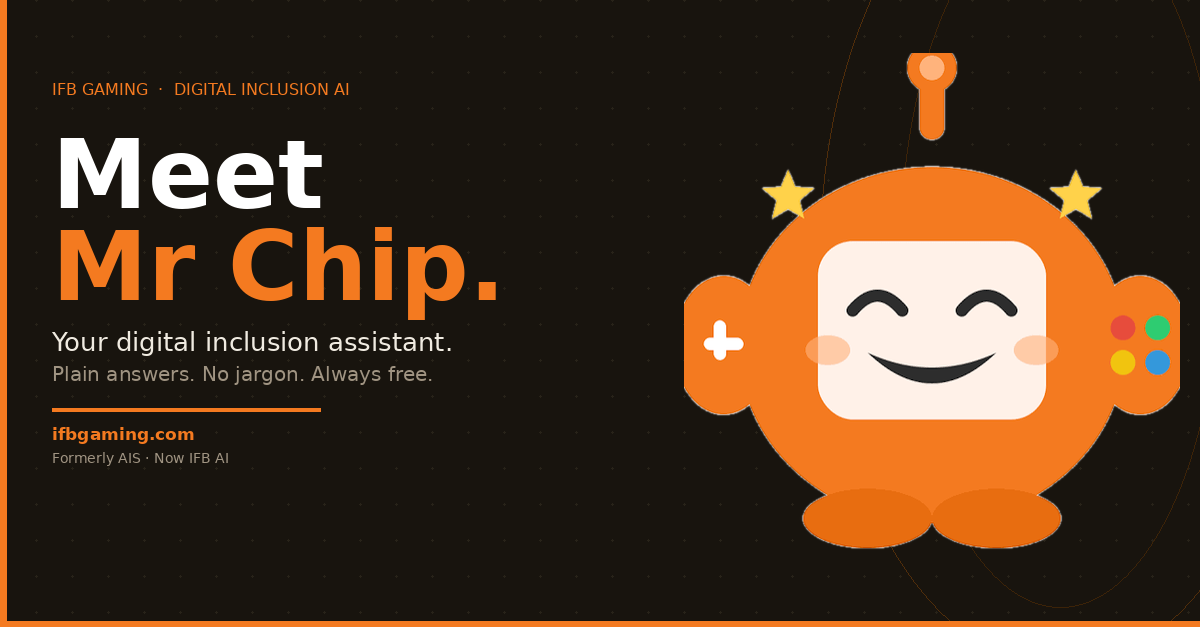
Mr Chip: Our Digital Inclusion Mascot & Guide

IFB Gaming · Benefit Realisation

Mr Chip: Our Digital Inclusion
Mascot & Guide

How IFB AI — powered by the Adewole Intelligence Suite — delivers real value to the communities we serve through an approachable, personality-led AI experience.

Version 2.0 Updated October 2026 Status Live on ifbgaming.com
Mr Chip — IFB Gaming digital inclusion mascot
3
Primary audience groups served
24/7
Always-on availability
Free
Zero cost to every user
Multi‑lingual
Supports many languages

What is Mr Chip?

Mr Chip is IFB Gaming’s friendly AI character — a digital helper with a personality. He lives on ifbgaming.com and answers questions about using technology: how to set up a phone, stay safe online, find local services, or simply understand what a word means. He is available 24 hours a day, seven days a week, at no cost to the person asking.

Under the hood, Mr Chip is powered by the Adewole Intelligence Suite (AIS) — a purpose-built AI system designed specifically for digital inclusion work. Mr Chip is the human face of that system: approachable, patient, and never condescending.

Who is Mr Chip for?

🌿
Absolute Beginners
First-timers who’ve never owned a smartphone or used the internet — the core of IFB Gaming’s mission.
● Excellent fit
  • ✓#9679;Plain-English answers, zero jargon
  • ✓#9679;Step-by-step guidance on demand
  • ✓#9679;Patient, endlessly repeatable support
  • ✓#9679;Multilingual — answers in their language
🤝
Community Leaders
Volunteers, carers and organisers who support others and need a reliable backup resource.
● Very strong fit
  • ✓#9679;Quick reference during group sessions
  • ✓#9679;Reduces reliance on a single expert
  • ✓#9679;Consistent, trustworthy information
  • ✓#9679;Frees leaders for human connection
💻
Advanced Tech Users
Experienced users seeking deep technical or specialist integration answers.
● Out of scope
  • ✗#9675;Optimised for inclusion, not IT support
  • ✗#9675;Specialist platforms better suited here
  • ✗#9675;Calibrated for first-time learners

The benefits in plain English

Benefit What it means in practice How we know it’s working
Reduces fear of technologyA friendly character lowers the psychological barrier to asking for help. People who would never call a helpline will chat with Mr Chip.Session start rate; repeat visits
Around-the-clock supportAvailable at 11pm on a Sunday just as easily as 9am on a Monday. No waiting, no opening hours.Volume of out-of-hours chats
Scales without extra costOne deployment serves unlimited people at once. Whether 5 or 500 need help today, the cost is the same.Concurrent session count
Consistent, accurate answersEvery person gets the same carefully checked information. No bad days, no tired volunteers giving slightly wrong advice.Helpfulness ratings; complaint rate
Multilingual supportMr Chip responds in the language the person uses — removing the barrier for Yoruba, Polish, Somali, Bengali speakers and more.Language of sessions; non-English engagement rate
Frees up staff timeRoutine questions handled by Mr Chip so the team can focus on complex, human-centred work that really needs them.Queries escalated to a human
Insight into what people needThe questions people ask Mr Chip show exactly which digital skills gaps exist — so IFB Gaming can build better programmes.Monthly insight reports; topic analysis

Why multilingual matters: Across Southwark, Lambeth, Croydon, and Bromley, hundreds of languages are spoken at home. Many residents are highly capable adults who are digitally excluded for one simple reason: the help available is only in English. Mr Chip breaks that barrier — a Yoruba-speaking grandmother in Peckham, a Polish-speaking parent in Croydon, or a Somali-speaking carer in Brixton all get the same quality of support as a native English speaker.

“The Adewole Intelligence Suite has been evaluated against the needs of digitally excluded communities across London. Mr Chip is the most accessible entry point we have created — a character that makes asking for help feel natural rather than intimidating.”

— IFB Gaming Digital Inclusion Team, 2026

Full Report

Virgin Media O2 Renews Its Partnership With Good Things Foundation

Sector News · Our Take

Virgin Media O2 Renews Its Partnership With Good Things Foundation

What it means at the local level

Virgin Media O2 has just renewed its partnership with Good Things Foundation, marking five years of the National Databank, the mobile-data equivalent of a foodbank, and setting a new target of connecting 500,000 low-income households by 2030 under its Responsible Business Plan.

The headline numbers are genuinely significant. Over 550,000 people experiencing financial hardship have been connected through the National Databank in the past five years. Good Things Foundation’s wider National Digital Inclusion Network, the same network IFB Gaming sits within, has reached 1.7 million people in the last three years alone.

But the number that matters most to us isn’t in the press release. It’s this:

Almost a quarter of all O2 SIM cards distributed through the National Databank have gone out through local community organisations and libraries, not head-office logistics.

That’s the part of this story we know from the ground up, not the headline.

We’ve already seen this network work

A few weeks ago, we had a request for a SIM card from someone in East London, outside our usual Southwark and Lambeth delivery area, who also couldn’t travel to collect one. We couldn’t post her a SIM directly. But because the National Databank network already reaches into local libraries, we were able to point her to her nearest Newham library and get her connected without her needing to come to us at all.

That’s what a renewed, well-funded national partnership actually buys you at street level: more local doors that can say yes, even when the organisation someone first reaches out to can’t be the one to help directly.

Where IFB Gaming fits

Our own Winter Data Care programme and Data Waypoint network operate on the same underlying principle: national infrastructure means nothing if it doesn’t have a genuine local front door. We’re not a competitor to the National Databank, we’re one of the local access points that makes a national commitment like “500,000 households by 2030” actually reachable by an actual person, in an actual borough, this week.

As Virgin Media O2 and Good Things Foundation scale this ambition, the organisations doing the last-mile work, in libraries, community centres, and local outreach like ours, become more important, not less. National funding and infrastructure only convert into real impact when there’s a trusted local presence to carry it the final few miles.

If your organisation is thinking about becoming a local access point, whether through the National Databank, or through our own Data Waypoint network, this is a good moment to have that conversation. The demand is real, and it’s growing in places the headline numbers don’t always show.

Become a Data Waypoint →

Our AI Assistant Now Speaks Your Language, Not Just English

Announcement · AI · Accessibility

Our AI Assistant Now Speaks Your Language, Not Just English

IFB Gaming

Research we’ve read this year, from Accenture’s AI Participation Gap report to Good Things Foundation‘s own regional network meet-ups, keeps saying the same thing: people don’t just need access to AI tools, they need to understand what’s happening in their own language. Not a translated welcome message. The whole conversation.

So we built exactly that, and it’s live on our homepage now.

A Real Conversation, Not a Demo

We tested it ourselves before writing this. We said hello. It asked what language we were most comfortable in. We said Yoruba.

yoruba
Ẹ káàbọ̀.
Èdè Yorùbá dára fún mi.
Báwo ni mo ṣe lè ràn yín lọ́wọ́ lónìí?

It didn’t just greet us in Yoruba and switch back to English. It offered its menu of options in Yoruba. When we said thank you, “Ose”, it replied “Ẹ ṣé púpọ̀.” The whole exchange, start to finish.

Why This Matters

This is a direct answer to something we’ve heard named specifically, by researchers, by Good Things Foundation’s own network, by the families we work with: language shouldn’t be the reason someone is left guessing at a screen. If English isn’t your first language, or your most comfortable one, you shouldn’t have to fight through it just to get help.

We built our Inclusion & AI Literacy Assistant to close that gap properly, not with a token gesture, but with a real, working conversation in whatever language someone actually needs.

Not a Generic AI Bot

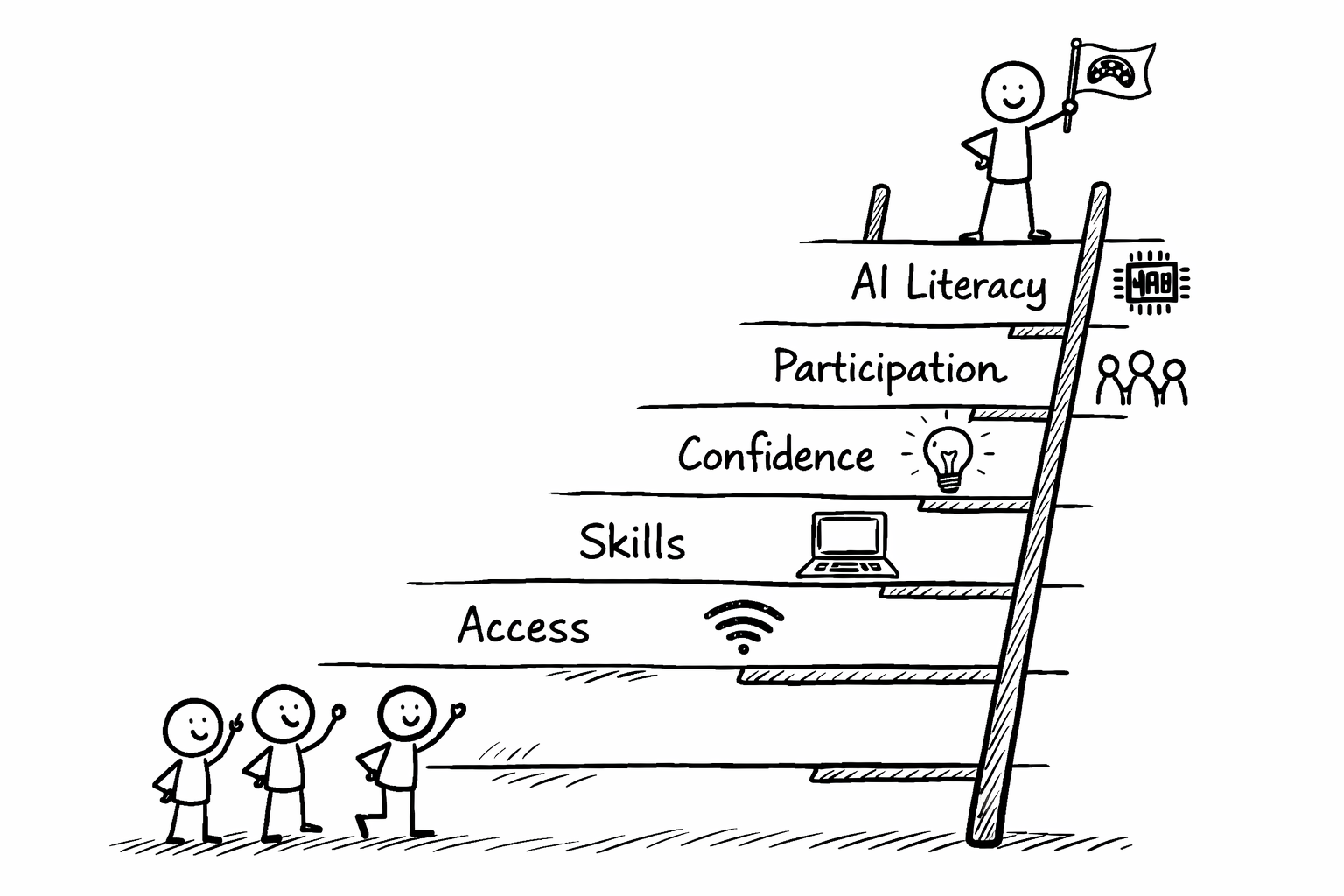
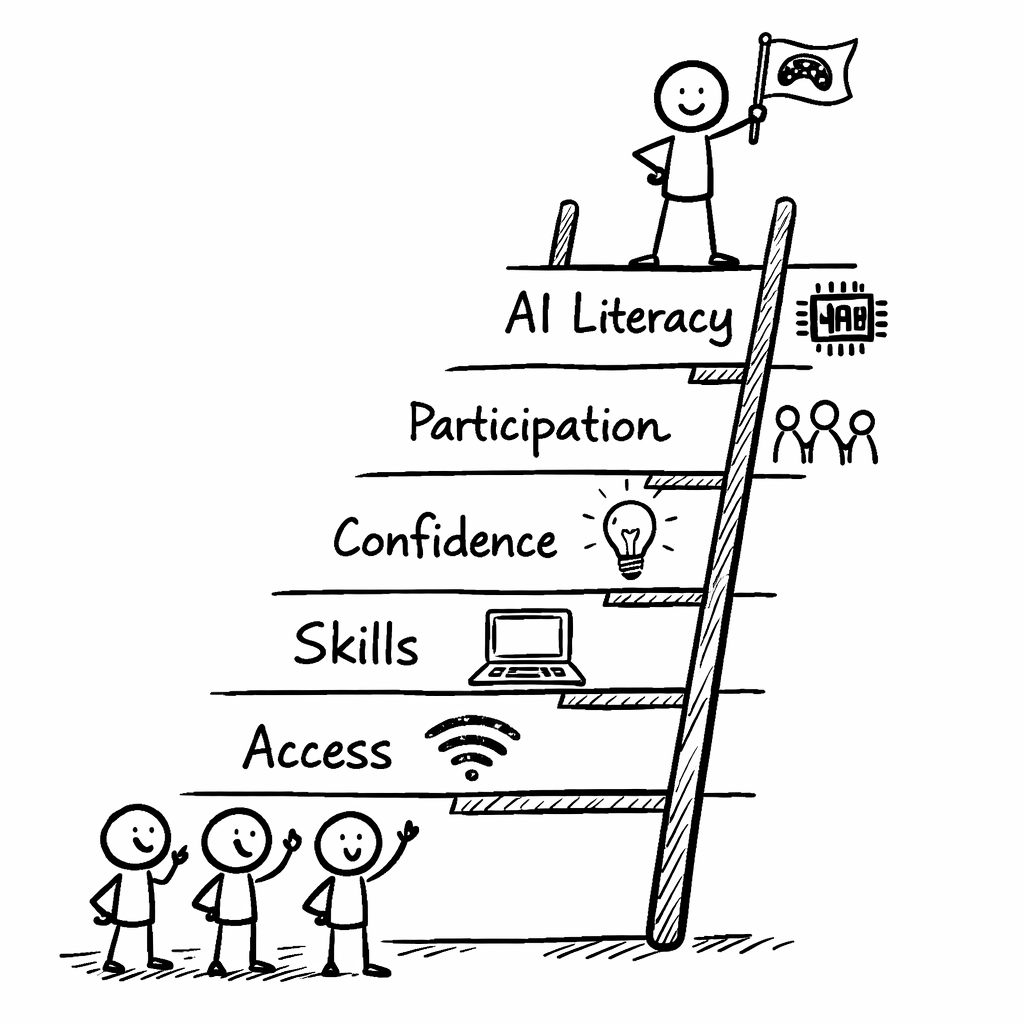
Most AI assistants are a generic model with a company’s branding on top. Ours isn’t. It’s built on the same frameworks that shape everything else we do: the Access → Skills → Confidence → Participation cycle behind our Digital Inclusion Toolkit, and John Adewole’s own MOSFC and 7 Pillars models, the same thinking behind how we design every programme we run.

That means when someone asks the assistant for help, it isn’t guessing. It’s reasoning from a structure built specifically for digital inclusion, not a general-purpose chatbot repurposed for the occasion.

Try It Yourself

Look for the chat icon on ifbgaming.com and say hello, in whatever language feels right to you.

AIS built by John Adewole.

Digital Inclusion Works Better When a Place Works Together: A Look at Good Things’ Evidence

New positioning paper

Digital inclusion works better when a place works together

Our new positioning paper shows how the Stage Index supports a place-based approach.

We’ve written a short positioning paper for councils and local partners, and we wanted to introduce it here.

It builds on recent research from Good Things Foundation, Strengthening a place-based approach to digital inclusion, which makes a simple but important point: tackling digital exclusion in a place works best when local partners act as one coordinated system, not as a scatter of separate projects. That means a shared vision, shared leadership, a shared way of reaching the people who are excluded, and a shared way of measuring whether things are actually improving.

Where our toolkit fits

Our paper looks honestly at where the IFB Gaming Stage Index helps with that, and where it doesn’t. We’re clear about one thing up front: the Stage Index is not a partnership tool, and it doesn’t replace Good Things Foundation’s. The two do different jobs, and they work well side by side.

  • Good Things Foundation’s tool helps a place understand how well its partners are working together.
  • Our Stage Index gives those same partners a shared, resident-level evidence base to work together around.
  • Together, they help a place see who is excluded, agree what to do, and prove that it is making a difference.

The paper maps the Stage Index against the four areas the research highlights, and is honest about which ones a measurement tool can genuinely support and which depend on leadership and funding that no tool can supply. If you work in a council or a local partnership, we think it’s a useful, practical read.

How to get the paper

The full positioning paper is available on request, we’re happy to send it over.

Head to our contact page and, in the message field, just mention you’d like the place-based positioning paper.

We’ll get it straight back to you, and we’re always glad to talk about how it might apply to your area.

Contact us

climbing towards digital empowerment

Play, Participation, and Power: Why Gaming Matters for Digital Inclusion

Across the world, gaming is often viewed primarily as entertainment — a pastime enjoyed by millions of players across consoles, personal computers, and mobile devices. Yet gaming is much more than a form of leisure.

At its core, gaming is a powerful system for learning, participation, and problem-solving.

The same principles that make games engaging — curiosity, challenge, progress, responsive feedback, and collaboration — can also be applied to help communities build confidence, develop digital skills, and participate more fully in an increasingly digital society.

At IFB Gaming, we believe that gaming principles can play an important role in shaping the future of digital inclusion and community empowerment.

Let’s break it down.

The Participation Challenge

Digital inclusion has traditionally focused on three key challenges:

• access to devices and connectivity
• digital skills and literacy
• confidence using online services

Over the past decade, governments, charities, and community organisations have worked tirelessly to address these barriers. Their efforts have helped millions of people gain access to the internet and develop the skills needed to navigate the digital world.

However, access and skills alone do not guarantee participation.

Many people still feel uncertain, intimidated, or disconnected from digital systems. For some, technology can feel like an unfamiliar environment — one that is difficult to navigate without guidance.

This is where gaming offers an important insight.

Games succeed because they encourage participation rather than demand expertise.

Players are invited to explore, experiment, and progress step by step.

Failure is part of the process, and progress is celebrated.

Learning Through Play

One of the most powerful aspects of gaming is its ability to support learning through play.

Games are designed to introduce new challenges gradually. Players start with simple tasks, build confidence through practice, and unlock more complex challenges as their skills develop.

This structure mirrors effective learning environments.

In digital skills programmes, for example, participants may need to learn how to:

  • create an email account
  • engage through chat
  • navigate online services
  • recognise online risks
  • access digital health services
  • apply for jobs online

When these activities are presented as technical tasks, they can feel intimidating. But when they are structured as missions, levels, or achievements, they become more engaging and motivating.

Gamification — the use of game mechanics in non-game contexts — can therefore transform digital learning into a progressive and confidence-building journey.

Gaming as a Gateway to Digital Confidence

For many people, gaming represents their first interaction with digital environments.

Even simple games introduce players to key digital concepts:

  • navigating virtual spaces
  • solving problems
  • collaborating with others
  • managing digital systems

These experiences can build confidence that extends far beyond gaming itself.

Young people who play games often develop skills in strategic thinking, communication, and problem-solving. Older adults who explore digital games may gain confidence using devices and navigating digital interfaces.

Gaming can therefore act as a gateway into broader digital participation.

Community Engagement Through Gamification

Beyond individual learning, gaming principles can also strengthen community engagement.

Community programmes often struggle with participation. Workshops, meetings, or training sessions may be valuable but difficult to sustain without ongoing motivation.

Gamification can help address this challenge by introducing elements such as:

  • challenges and missions
  • progress tracking
  • collaborative achievements
  • recognition and rewards

These elements encourage participants to remain engaged while celebrating progress and shared achievements.

For example, digital skills programmes can introduce learning pathways where participants unlock new levels as they complete training modules. Community challenges can encourage residents to contribute to local initiatives, share knowledge, or participate in digital learning events.

By transforming participation into a shared journey, gamification can help strengthen community bonds and collective motivation.

Gaming in the Age of Artificial Intelligence

As emerging technologies such as artificial intelligence become embedded in everyday digital systems, the need for inclusive approaches to digital learning will only increase.

AI-powered services are already influencing areas such as:

  • healthcare
  • education
  • employment
  • financial services
  • information access

Understanding these technologies requires more than basic digital skills. Individuals must develop confidence navigating complex digital environments and questioning automated outputs.

Gaming and gamification can play an important role in supporting this transition.

By creating safe, interactive environments where people can explore technology without fear of failure, gaming can help communities build the confidence needed to engage with emerging technologies.

From Entertainment to Empowerment

Gaming is often misunderstood as a purely recreational activity.

Yet when we examine the underlying mechanics of games — exploration, feedback, collaboration, and progression — we see a powerful framework for human engagement and learning.

When these principles are applied thoughtfully, gaming can support:

  • digital inclusion
  • community learning
  • civic participation
  • technology confidence
  • social connection

In this sense, gaming is not simply about entertainment.

It is about empowerment through participation.

The Role of IFB Gaming

At IFB Gaming, our work explores how gaming principles and emerging technologies can support communities in navigating the digital world.

Through initiatives focused on digital inclusion, community learning, and responsible technology engagement, we aim to demonstrate how gaming can become a tool for education, participation, and social impact.

Our work recognises that digital inclusion is not only about providing access to technology.

It is about helping individuals and communities develop the confidence, curiosity, and capability to shape their own digital futures.

Looking Ahead

As society continues to evolve in response to rapid technological change, new approaches to learning and engagement will become increasingly important.

Gaming — with its emphasis on participation, experimentation, and progress — offers a powerful model for how communities can learn and grow together.

By embracing the principles of play, collaboration, and discovery, we can create more inclusive pathways into the digital world.

Because when people feel confident to explore, learn, and participate, they do more than access technology.

They gain the power to shape the future.

IFB Gaming Joins FutureDotNow Coalition

Our commitment is to elevate digital inclusion and eradicate digital poverty. We recognise that this endeavour requires a collective effort beyond any single expert, organisation, government, or community. Hence, we are proud to announce that we are now an active member of the FutureDotNow coalition and will align our tangible and intangible resources and objectives with the alliance to eradicate digital inclusion and data poverty from the UK.

The pandemic has underscored the urgency of our mission, signalling that traditional methods may no longer suffice during technology adoption maturity and beyond.

Future Dot Now is a coalition of forward-thinking organisations dedicated to enhancing essential digital skills in the UK’s workforce. There are currently 133 members in the coalition, including esteemed organisations such as Good Things Foundation, PwC, and Lloyds Banking Group.

We are honoured to be a part of this dynamic coalition.

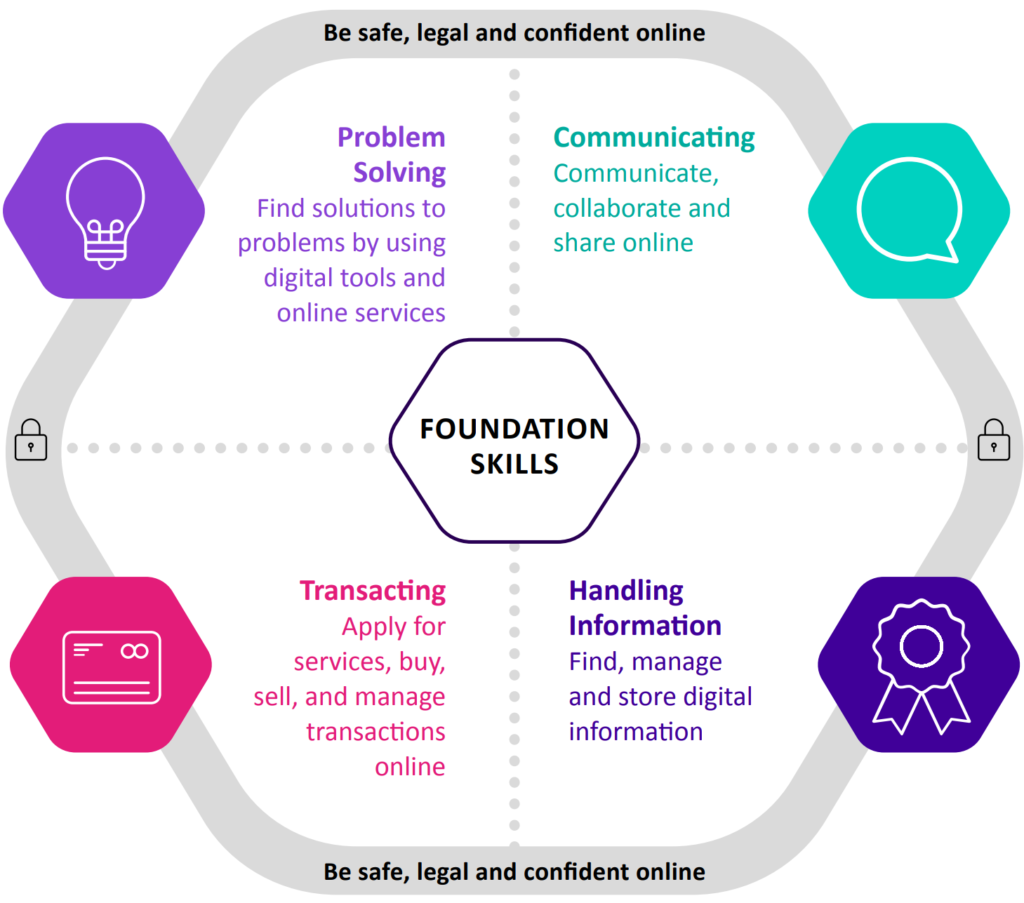
FutureDotNow Essential Digital Skills Framework
Essential Digital Skills Framework (Credit: Future Dot Now)

Fostering a digitally-enabled culture is pivotal to our nation’s success. As members of the Future Dot Now coalition, we aim to contribute valuable insights while benefiting from the expertise of other esteemed organisations within the coalition.

(Future Dot Now)

About IFB Gaming

IFB, an acronym for International Friends Bureau, is a hybrid bridge and connector research and learning organisation focused on the intersection of play, lifelong learning and digital exclusion.

Our Empowering Futures initiative is an impact-driven initiative designed to tackle digital exclusion, data poverty, and accessibility challenges faced by underserved communities. The programme provides free SIM cards, digital skills training, and connectivity solutions to low-income individuals, refugees, and those without recourse to public funds.

What Membership in the Coalition Means to IFB Gaming

Given our unique positioning as a bridge research and learning organisation researching in English communities, affiliation with the coalition aligns with our mission in several ways:

  1. Support from Digital Inclusion Leaders: We anticipate garnering support from prominent individuals and organisations actively engaged in digital inclusion initiatives in England and Wales.
  2. Knowledge Exchange: Participating in the coalition allows us to share our insights and gain fresh perspectives and expertise specifically tailored to digital inclusion.
  3. Advocating Gamification: We intend to advocate for the benefits of gamification and emerging trends within the coalition.
  4. Awareness Initiatives: We aim to create awareness programs highlighting the myriad applications available to Third Sector organisations and community groups.
  5. Strategic Partnerships: Collaborative efforts within the coalition will contribute to strengthening the UK’s position through strategic partnerships within the Commonwealth.
  6. Promotion of Digital Skills Framework: We are committed to promoting the Essential Digital Skills Framework within BAME communities, starting from the grassroots level.
  7. Community Engagement: We will facilitate volunteering opportunities within the community and offer free or affordable workplace digital training and products to coalition members.

The Essential Digital Skills (EDS) Framework, outlined above, delineates five key skills and provides examples of tasks that individuals should master to demonstrate competence in each skill. Notably, the fifth skill—being safe, legal, and confident online—is interwoven across the other four.

The pandemic has accentuated existing gaps and exposed new challenges. It is evident that while there are numerous efforts underway in UK communities aimed at fostering a prosperous, connected, equitable, and sustainable digital economy, much of this work operates in isolation, often lacking proper documentation and alignment with systemic structures.

We firmly believe that a robust, comprehensive, and cyclical strategy is now imperative, one that is firmly grounded in strategic partnerships and driven from the grassroots and the policy (bottom-up-top-down), with a focus on empowering individuals and communities.

According to the City of London News Room, the UK is leading the digital revolution, with technology, media, and creative businesses outpacing the broader economy in terms of growth. Nevertheless, the rapid pace of change is leaving a significant portion of our population behind:

  • 53% of UK employees lack the essential digital skills necessary for the workplace.
  • 4.1 million adults in the UK remain ‘offline,’ with 75% indicating no motivation to change.
  • 11.3 million UK adults still lack the fundamental skills needed to access the internet, communicate effectively, and solve problems online.

The Future Dot Now coalition has made the following commitments, and we encourage other organisations to join us in this endeavour. Only through collective action can we develop fluid, interconnected, and sustainable solutions that are equal to the tasks and challenges that lie ahead.

Upcoming Events