

Play, Participation, and Power: Why Gaming Matters for Digital Inclusion
Across the world, gaming is often viewed primarily as entertainment — a pastime enjoyed by millions of players across consoles, personal computers, and mobile devices. Yet gaming is much more than a form of leisure.
At its core, gaming is a powerful system for learning, participation, and problem-solving.
The same principles that make games engaging — curiosity, challenge, progress, responsive feedback, and collaboration — can also be applied to help communities build confidence, develop digital skills, and participate more fully in an increasingly digital society.
At IFB Gaming, we believe that gaming principles can play an important role in shaping the future of digital inclusion and community empowerment.
Let’s break it down.
The Participation Challenge
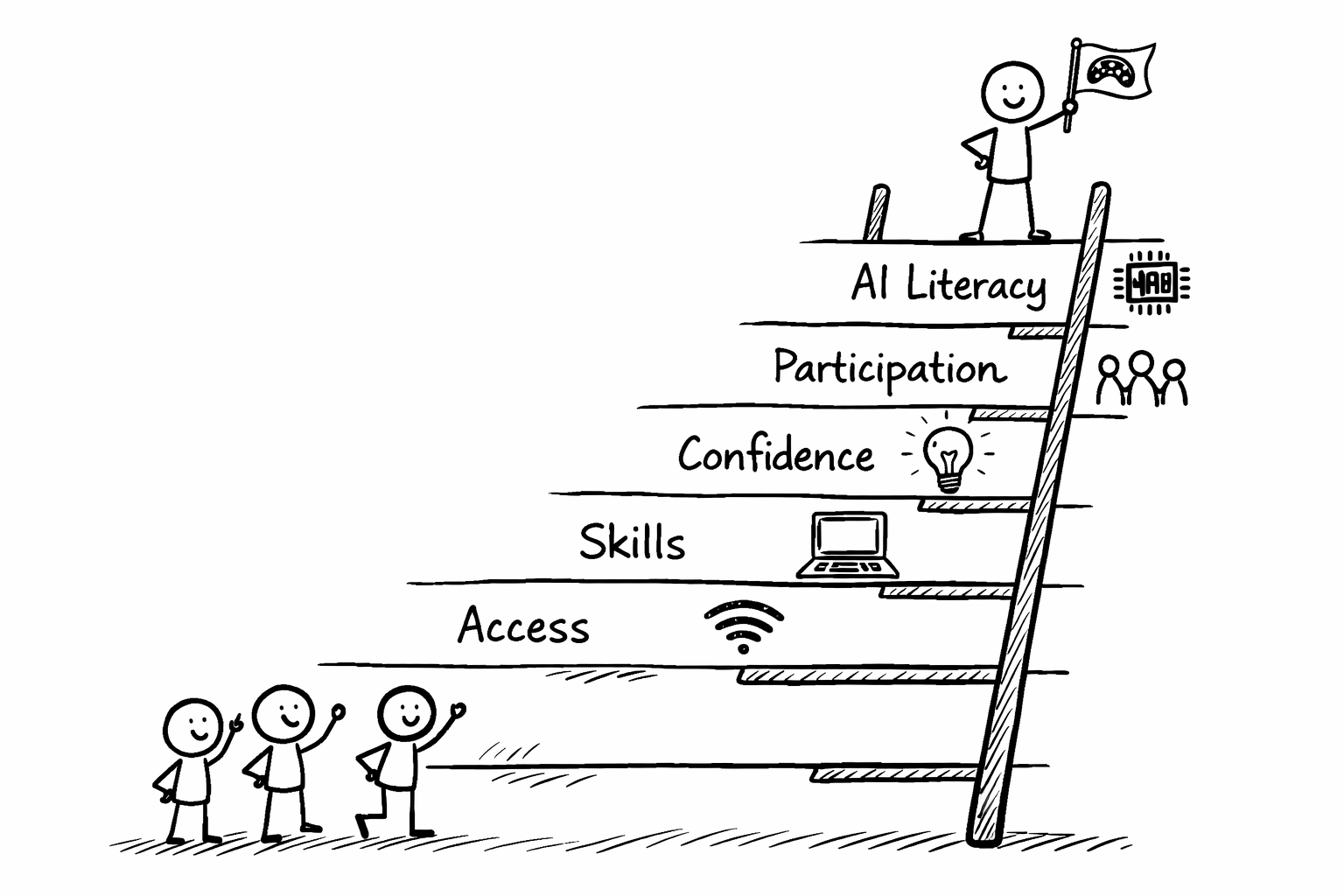
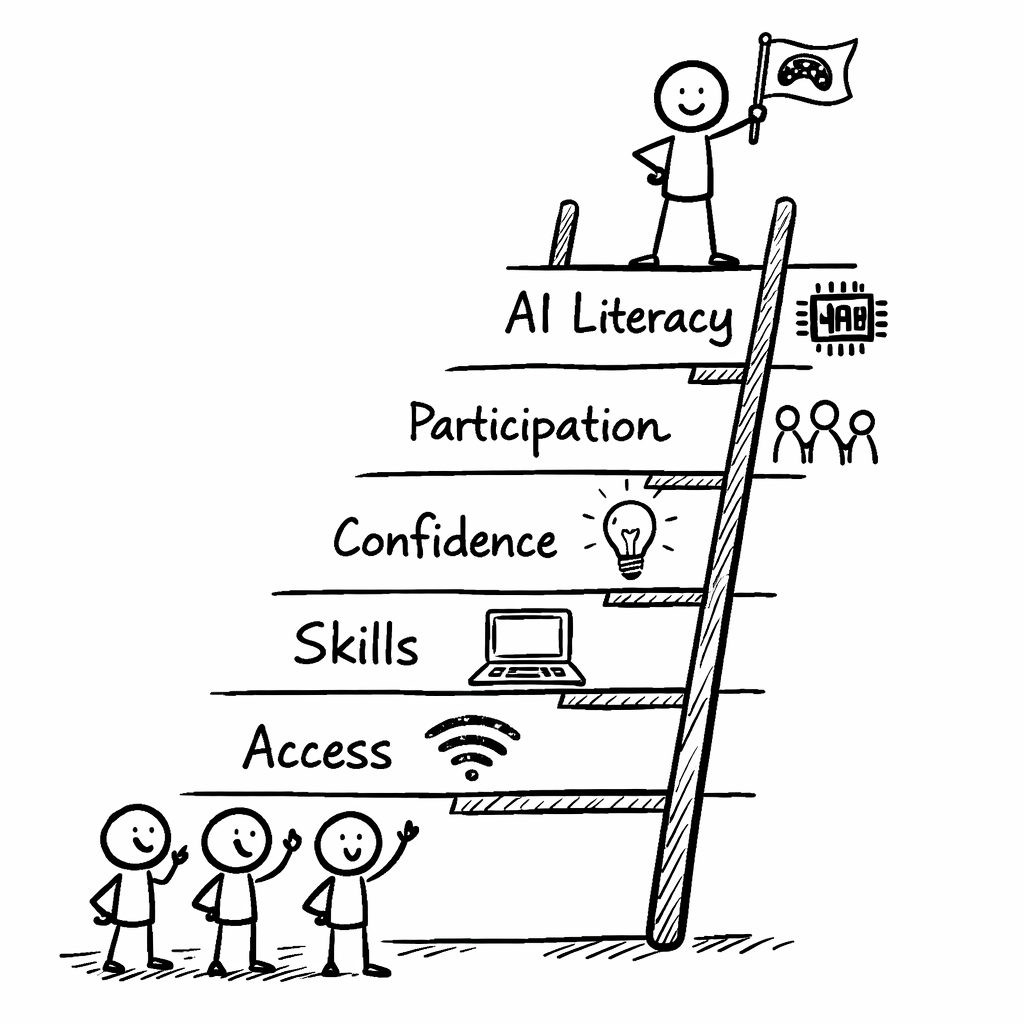
Digital inclusion has traditionally focused on three key challenges:
• access to devices and connectivity
• digital skills and literacy
• confidence using online services
Over the past decade, governments, charities, and community organisations have worked tirelessly to address these barriers. Their efforts have helped millions of people gain access to the internet and develop the skills needed to navigate the digital world.
However, access and skills alone do not guarantee participation.
Many people still feel uncertain, intimidated, or disconnected from digital systems. For some, technology can feel like an unfamiliar environment — one that is difficult to navigate without guidance.
This is where gaming offers an important insight.
Games succeed because they encourage participation rather than demand expertise.
Players are invited to explore, experiment, and progress step by step.
Failure is part of the process, and progress is celebrated.
Learning Through Play
One of the most powerful aspects of gaming is its ability to support learning through play.
Games are designed to introduce new challenges gradually. Players start with simple tasks, build confidence through practice, and unlock more complex challenges as their skills develop.
This structure mirrors effective learning environments.
In digital skills programmes, for example, participants may need to learn how to:
- create an email account
- engage through chat
- navigate online services
- recognise online risks
- access digital health services
- apply for jobs online
When these activities are presented as technical tasks, they can feel intimidating. But when they are structured as missions, levels, or achievements, they become more engaging and motivating.
Gamification — the use of game mechanics in non-game contexts — can therefore transform digital learning into a progressive and confidence-building journey.
Gaming as a Gateway to Digital Confidence
For many people, gaming represents their first interaction with digital environments.
Even simple games introduce players to key digital concepts:
- navigating virtual spaces
- solving problems
- collaborating with others
- managing digital systems
These experiences can build confidence that extends far beyond gaming itself.
Young people who play games often develop skills in strategic thinking, communication, and problem-solving. Older adults who explore digital games may gain confidence using devices and navigating digital interfaces.
Gaming can therefore act as a gateway into broader digital participation.
Community Engagement Through Gamification
Beyond individual learning, gaming principles can also strengthen community engagement.
Community programmes often struggle with participation. Workshops, meetings, or training sessions may be valuable but difficult to sustain without ongoing motivation.
Gamification can help address this challenge by introducing elements such as:
- challenges and missions
- progress tracking
- collaborative achievements
- recognition and rewards
These elements encourage participants to remain engaged while celebrating progress and shared achievements.
For example, digital skills programmes can introduce learning pathways where participants unlock new levels as they complete training modules. Community challenges can encourage residents to contribute to local initiatives, share knowledge, or participate in digital learning events.
By transforming participation into a shared journey, gamification can help strengthen community bonds and collective motivation.
Gaming in the Age of Artificial Intelligence
As emerging technologies such as artificial intelligence become embedded in everyday digital systems, the need for inclusive approaches to digital learning will only increase.
AI-powered services are already influencing areas such as:
- healthcare
- education
- employment
- financial services
- information access
Understanding these technologies requires more than basic digital skills. Individuals must develop confidence navigating complex digital environments and questioning automated outputs.
Gaming and gamification can play an important role in supporting this transition.
By creating safe, interactive environments where people can explore technology without fear of failure, gaming can help communities build the confidence needed to engage with emerging technologies.
From Entertainment to Empowerment
Gaming is often misunderstood as a purely recreational activity.
Yet when we examine the underlying mechanics of games — exploration, feedback, collaboration, and progression — we see a powerful framework for human engagement and learning.
When these principles are applied thoughtfully, gaming can support:
- digital inclusion
- community learning
- civic participation
- technology confidence
- social connection
In this sense, gaming is not simply about entertainment.
It is about empowerment through participation.
The Role of IFB Gaming
At IFB Gaming, our work explores how gaming principles and emerging technologies can support communities in navigating the digital world.
Through initiatives focused on digital inclusion, community learning, and responsible technology engagement, we aim to demonstrate how gaming can become a tool for education, participation, and social impact.
Our work recognises that digital inclusion is not only about providing access to technology.
It is about helping individuals and communities develop the confidence, curiosity, and capability to shape their own digital futures.
Looking Ahead
As society continues to evolve in response to rapid technological change, new approaches to learning and engagement will become increasingly important.
Gaming — with its emphasis on participation, experimentation, and progress — offers a powerful model for how communities can learn and grow together.
By embracing the principles of play, collaboration, and discovery, we can create more inclusive pathways into the digital world.
Because when people feel confident to explore, learn, and participate, they do more than access technology.
They gain the power to shape the future.