IFB Gaming

Loading

Unveiling User Perspectives through Focus Groups and Usability Testing

Welcome to our latest update! In this edition, we dive into the world of user research with a closer look at two essential methods: Focus Groups and Usability Testing. Discover how these techniques unlock valuable insights into user perspectives and help refine the user experience of tech products. Let’s explore the power of understanding user opinions and improving usability. Read on!

A focus group is a qualitative research method in which a small, diverse group of participants (usually 6-12 people) is brought together to discuss a specific topic, product, or concept in a structured, facilitated discussion. The purpose of a focus group is to gather insights, opinions, and perceptions from participants about the subject under discussion. It is often used to explore people’s attitudes, beliefs, and feelings, as well as to generate ideas and uncover issues related to a particular topic.

Usability testing, on the other hand, is a method used to evaluate the user-friendliness and effectiveness of a product, typically a software application, website, or device. Usability testing involves having participants (usually individual users) perform specific tasks using the product while their interactions and feedback are observed and recorded. The primary goal is to identify usability issues, such as difficulties in navigation, user interface design, and task completion, to improve the product’s overall user experience.

In some cases, a combination of both methods may offer the most comprehensive insights into tech use.

User Research Methods

Focus groups and usability testing are both valuable methods for collecting data about tech use, but they serve different purposes and have distinct advantages. Here’s a comparison of the two:

Focus Groups:

  1. Diverse Perspectives: Focus groups are excellent for gathering diverse opinions and insights. They bring together a small group of participants who can discuss their experiences, preferences, and attitudes regarding tech use.
  2. Idea Generation: They can be instrumental in generating new ideas and understanding the broader context in which technology is used. Participants can share their thoughts and brainstorm solutions.
  3. Perceptions and Feelings: Focus groups are useful for exploring participants’ perceptions, feelings, and social dynamics related to technology. This is especially valuable for understanding the emotional aspects of tech use.
  4. Cost-Effective: They are generally cost-effective compared to usability testing, as they involve fewer participants and can uncover a wide range of issues in a single session.

Usability Testing:

  1. Task-Oriented: Usability testing is task-oriented and focuses on how users interact with technology to complete specific tasks. It provides detailed insights into the user experience and identifies usability issues.
  2. Objective Data: Usability testing collects objective data, often through observations and metrics like task completion times and error rates. This data is valuable for making concrete improvements to the technology.
  3. Identification of Usability Issues: It is highly effective at identifying usability problems and bottlenecks in the user interface. This is critical for refining the user experience and optimising tech use.
  4. Iterative Improvement: Usability testing is well-suited for iterative design and development. It provides actionable feedback that can be used to make incremental enhancements to a tech product.

Focus groups are best for gathering qualitative data on user opinions, perceptions, and social dynamics related to tech use. They are excellent for idea generation and understanding the broader context. Usability testing, on the other hand, is task-oriented and provides objective, quantitative data on how users interact with technology. It excels at identifying usability issues and supporting iterative improvements.

Both methods are valuable for different research objectives and can provide valuable information for product development and decision-making.

The choice between focus groups and usability testing depends on your research goals. If you want to understand user opinions and experiences broadly, focus groups are a good choice. If you’re focused on identifying and solving specific usability problems, usability testing is more appropriate. In some cases, a combination of both methods may offer the most comprehensive insights into tech use.

Embracing Gamification for Digital Inclusion and Community Resilience

What is Gamification?

Gamification is the application of game design elements and principles in non-game environments in order to increase engagement, motivation, and participation.

It involves incorporating features commonly found in games — such as points, levels, badges, leaderboards, challenges, missions, and rewards — into activities like education, community development, training programmes, and digital learning.

The goal is simple: make participation more engaging and rewarding.

By tapping into the psychological drivers that make games compelling — including achievement, curiosity, competition, and progress — gamification can encourage people to stay motivated and continue learning or contributing over time.

Today, gamification is used in many sectors, including:

  • education and training
  • health and wellbeing programmes
  • employee engagement initiatives
  • marketing and customer experience
  • community participation programmes

When applied thoughtfully, gamification can transform activities that might otherwise feel difficult, technical, or intimidating into experiences that are accessible, enjoyable, and motivating.

Gamification and Community Development

One of the most important discussions around gamification is whether it can be applied meaningfully in real-world community development.

At IFB Gaming, our experience suggests that the answer is yes.

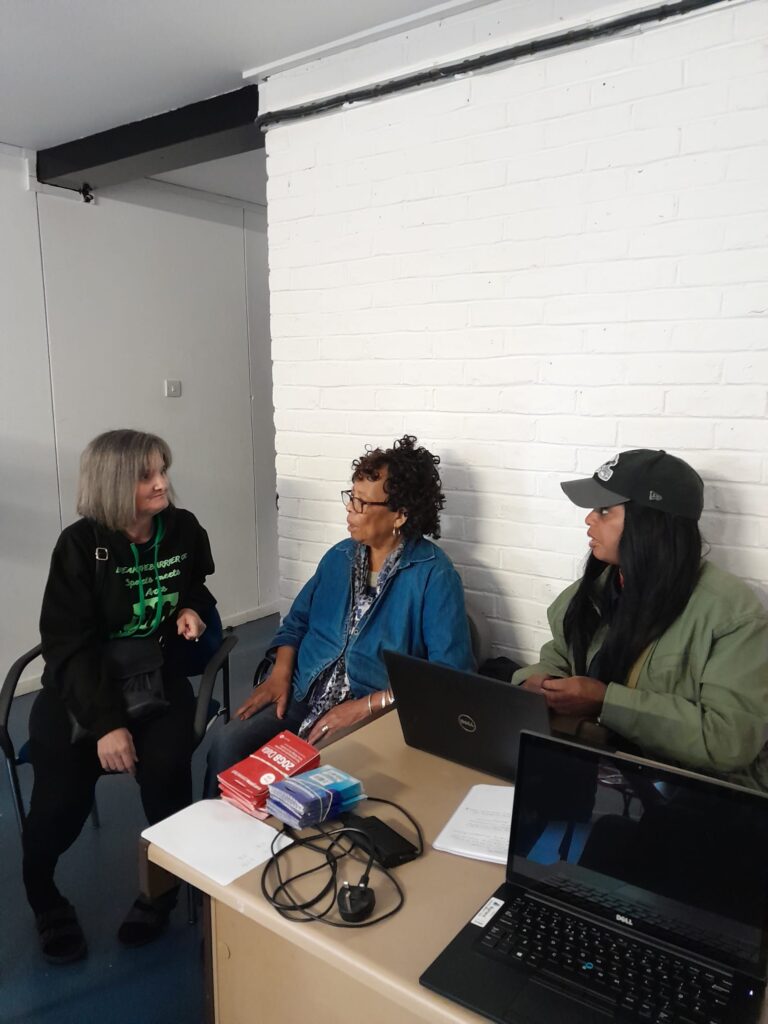
During Get Online Week: Inspiring Minds! Empowering Futures, we experimented with gamification approaches to encourage participation and digital learning within a South London community.

By framing participation as a series of challenges and missions, we transformed the learning environment into something more dynamic and engaging — almost like navigating a digital adventure similar to experiences found in open-world games such as Grand Theft Auto.

The objective was not to turn community work into entertainment, but rather to use familiar game mechanics to reduce barriers to participation.

How Gamification Can Strengthen Communities

Gamification can support community initiatives in several important ways.

Community Engagement

Gamification can encourage community members to actively participate in events, initiatives, and projects.

Tasks such as attending workshops, volunteering, contributing to local initiatives, or participating in digital training programmes can be framed as missions or achievements, making participation more interactive and rewarding.

Education and Digital Skill Development

Many community development programmes involve teaching new skills.

However, learning digital skills can feel intimidating for beginners, particularly for people who may have had limited exposure to technology.

Gamification helps address this challenge by turning learning into a progressive journey.

During Get Online Week, we used the educational platform Learn My Way, which provides structured digital learning pathways. By introducing elements of challenge, progress, and achievement, participants were able to move through learning modules with greater confidence and motivation.

Culture and Behaviour Change

Gamification can also support positive behaviour change within communities.

Challenges and reward systems can encourage activities such as:

  • recycling and environmental responsibility
  • energy conservation
  • trying digital services for the first time
  • adopting healthier lifestyles

By celebrating progress and recognising participation, gamification can reinforce positive habits and community engagement.

Community Building and Social Connection

Games naturally bring people together.

Gamified activities such as community challenges, neighbourhood competitions, or digital scavenger hunts can create opportunities for residents to interact with one another and develop a stronger sense of belonging.

In many communities, especially those experiencing social or digital isolation, this type of interaction can be extremely valuable.

Data Collection and Community Insight

Gamified platforms can also provide useful insights for community organisers.

For example, mobile apps or digital platforms could encourage residents to report local issues — such as potholes, graffiti, or maintenance concerns — while earning points or recognition for contributing to community improvement.

This approach allows communities to gather valuable information while encouraging civic participation.

Volunteer Motivation and Recognition

Volunteers are often the backbone of community programmes.

Gamification can help recognise and motivate volunteers by tracking contributions, celebrating milestones, and highlighting the impact of their efforts.

Leaderboards, recognition systems, or digital achievement badges can help volunteers feel valued while encouraging sustained engagement.

Gamification and Digital Inclusion

Gamification also has significant potential within digital inclusion initiatives.

Learning digital skills can be overwhelming for beginners. Tasks such as setting up an email account, navigating online services, or understanding online safety may appear simple to experienced users but can feel daunting for someone starting from scratch.

By introducing game elements such as levels, progress indicators, and achievement milestones, digital learning programmes can become more supportive and less intimidating.

Participants can progress step-by-step, gaining confidence as they unlock new skills and knowledge.

In this way, gamification helps transform digital learning from a purely technical process into a motivating and empowering experience.

Looking Ahead

As communities continue to navigate a rapidly evolving digital world, innovative approaches to engagement and learning will become increasingly important.

Gamification offers a promising pathway for making community initiatives more interactive, inclusive, and impactful.

At IFB Gaming, we believe that the principles of gaming — curiosity, challenge, collaboration, and progress — can play a powerful role in strengthening communities and supporting digital inclusion.

By thoughtfully integrating gamification into community programmes, organisations can inspire participation, build confidence, and help communities thrive in an increasingly digital society.

Our Commitment

At IFB Gaming, we continue to explore how gaming principles, emerging technologies, and community engagement strategies can work together to create more inclusive digital futures.

Through initiatives like Get Online Week, we are experimenting with practical approaches that help communities learn, participate, and grow together.

Because when learning feels like progress — and progress feels like a game — communities become stronger, more confident, and more connected.
Differences between Augmented Intelligence, Artificial Intelligence, and Augmented Reality

Technology is evolving rapidly, and terms such as Artificial Intelligence (AI), Augmented Intelligence, and Augmented Reality (AR) are increasingly used in conversations about the digital future.

Although these concepts sound similar, they refer to very different technologies and purposes. Understanding the differences can help individuals, communities, and organisations better navigate the changing digital landscape.

Below is a simple explanation of how these three technologies differ.

Artificial Intelligence (AI)

Artificial Intelligence refers to computer systems designed to perform tasks that normally require human intelligence.

These tasks can include:

  • analysing large amounts of data
  • recognising patterns
  • learning from information
  • making predictions
  • understanding natural language
  • solving complex problems

AI systems are trained using data and algorithms that allow them to improve their performance over time.

Today, AI powers many tools and services people use every day, including:

  • virtual assistants such as Siri or Alexa
  • recommendation systems used by streaming platforms
  • customer service chatbots
  • fraud detection systems in banking
  • autonomous and self-driving technologies

In most cases, AI operates behind the scenes within digital systems, helping computers process information and make decisions more efficiently.

Augmented Reality (AR)

Augmented Reality is a technology that enhances the real world by overlaying digital information onto a user’s physical environment.

Using devices such as smartphones, tablets, or AR glasses, digital elements — including images, text, sounds, or animations — can be layered onto what a person sees in the real world.

Augmented Reality does not focus on decision-making or intelligence. Instead, it enhances how we experience and interact with our surroundings.

Examples of AR include:

  • mobile games such as Pokémon Go
  • navigation apps that display directions over real-world environments
  • educational tools that visualise complex concepts
  • retail applications that allow users to preview products in their homes

AR creates an interactive bridge between the digital world and the physical world.

Augmented Intelligence

Augmented Intelligence refers to the use of artificial intelligence to support and enhance human decision-making, rather than replacing human judgement.

Instead of viewing AI as a substitute for human thinking, augmented intelligence focuses on collaboration between humans and intelligent systems.

In this approach, AI tools assist people by:

  • analysing large datasets quickly
  • identifying patterns humans might overlook
  • providing insights and recommendations
  • automating repetitive tasks

Humans remain responsible for interpretation, judgement, and final decisions.

Augmented Intelligence is increasingly used in fields such as:

  • healthcare diagnostics
  • financial analysis
  • scientific research
  • business decision-making
  • customer service support

The goal is not to replace human expertise, but to empower individuals with better information and insights.

Key Differences at a Glance

TechnologyMain PurposeExample Uses
Artificial Intelligence (AI)Enables computers to perform intelligent taskschatbots, recommendations, autonomous systems
Augmented Reality (AR)Enhances real-world experiences with digital overlaysgaming, navigation, education
Augmented IntelligenceUses AI to support human decision-makinghealthcare analysis, business insights

Why These Technologies Matter

As these technologies continue to develop, they are becoming increasingly embedded in everyday digital systems.

Understanding how they differ helps individuals, organisations, and communities make informed decisions about how technology is used and how it can be applied responsibly.

At IFB Gaming, we are interested in helping communities explore emerging technologies in ways that support learning, creativity, and digital inclusion.

As technologies such as AI, AR, and augmented intelligence evolve, building awareness and confidence around them will be an important step in ensuring that everyone can participate in the digital future.

Unlocking the Mysteries of AI: A Beginner’s Guide

Welcome back, curious enthusiasts!

At IFB Gaming, we understand that entering the world of technology and gaming can sometimes feel like stepping into a maze of acronyms and technical jargon. One term you have probably come across is AI, short for Artificial Intelligence.

But don’t worry — today we’re going to break it down in a simple way so that anyone, even beginners, can understand what AI is and why it matters.

What is AI, Anyway?

Artificial Intelligence, or AI, refers to computer systems that can perform tasks that normally require human intelligence. These tasks can include learning from information, recognising patterns, solving problems, and making decisions.

Think of AI as the “brain” behind a computer system.

Just as humans learn from experience and information, AI systems can analyse data and improve their performance over time. This allows computers to complete tasks in smarter and more efficient ways.

AI can help with many things, including:

  • answering questions
  • recommending movies or music
  • recognising voices and images
  • helping cars navigate roads
  • supporting medical research
  • powering digital assistants

In simple terms, AI is like having a smart digital helper that can learn from information and assist with complex tasks.

AI in Gaming

AI plays a major role in the gaming world.

When you play a video game and interact with characters that are controlled by the computer, those characters are often powered by AI. These are called Non-Player Characters (NPCs).

AI helps these characters behave in ways that feel realistic. For example, AI can control how enemies react, how teammates support you, or how characters respond to different situations in the game.

Without AI, games would feel predictable and repetitive. With AI, games can adapt to your actions, making the experience more exciting and immersive.

AI in Game Design

AI is not only used to control characters; it is also used to design better games.

Game developers use AI to:

  • create dynamic storylines
  • build realistic environments
  • test game mechanics
  • personalise gameplay for players

For example, AI can adjust the difficulty of a game depending on your skill level. If a game is too easy, the AI can make it more challenging. If it becomes too difficult, the AI can adapt to keep the experience enjoyable.

This helps create games that feel balanced, engaging, and personalised for each player.

In this Battlefield Co-op Gameplay video, the players navigate their way through AI-controlled opponents to rescue an Ambassador
In this video, the players navigate their way through AI-controlled opponents to rescue an Ambassador

AI Beyond Gaming

Although gaming is a great example of AI in action, artificial intelligence is used in many other areas of everyday life.

You may already interact with AI through:

  • voice assistants like Siri or Alexa
  • streaming recommendations on Netflix or Spotify
  • search engines
  • navigation systems
  • customer service chatbots

AI is becoming part of many digital services, helping systems respond faster, make better recommendations, and assist people in completing everyday tasks.

Why AI Matters for Digital Inclusion

As artificial intelligence becomes more common, it raises important questions about digital inclusion.

For many years, digital inclusion focused on helping people gain access to the internet, devices, and basic digital skills. That work remains essential.

However, as AI becomes embedded in services such as healthcare, education, banking, and public services, people will also need to understand how AI systems work and how to interact with them safely and confidently.

Communities that have only recently gained digital access may face a new challenge if AI systems become widespread without proper support.

This means that community organisations, schools, libraries, and digital inclusion programmes may soon play an important role in helping people:

  • understand AI-powered tools
  • question automated information
  • recognise misinformation
  • protect their personal data
  • build confidence when interacting with intelligent systems

Digital inclusion is therefore evolving. It is no longer only about accessing technology, but also about understanding the systems that shape the digital world.

Getting Started wirh AI

AI has been developing for many years, and it continues to evolve rapidly. The good news is that you don’t need to be a programmer or scientist to start exploring it.

You can begin by:

  • experimenting with AI tools
  • learning how recommendations work
  • exploring how AI appears in games and apps
  • asking questions about how technology makes decisions

The more you understand AI, the more confident you will feel navigating today’s digital world.

Our Commitment at IFB Gaming

At IFB Gaming, we are committed to helping communities, learners, educators, policymakers, charities, and researchers explore emerging technologies in ways that are accessible and inclusive.

We believe that understanding technologies like artificial intelligence can empower individuals and communities to participate more confidently in the digital future.

So keep exploring, stay curious, and remember:

AI can be a powerful sidekick in the digital world — helping us learn, create, and solve problems in new and exciting ways.

Stay tuned for more insights and resources from IFB Gaming.

Register for Get Online Week 2023’s Empowering Futures’

Get Online Week is back. It runs annually during Black History Month and it is currently on its 16th edition.

Why is Get Online Week important?

Nearly 1 in 5 adults lack the most basic digital skills needed for everyday life.

Over 1 in 20 households have no internet access, neither fixed line nor mobile.

2 million households struggle with affordability of internet access.

(AbilityNet)

What to expect this Get Online Week 2023

Free technology, computer and internet support for beginners.

Get support from IFB, BTB CIC and the NHS to access and understand essential digital services.

Whether you are a beginner, looking for educational resources or you are just struggling with a specific function, there will be a variety of departments based on our 6-Pillars of Digital Inclusion on the ground to support you.

You may also like to join us soon for more free events below:

Supporting Seniors to take back control of their healthcare by mastering the new NHS appointment booking process.

One of our primary objectives this year is to support Seniors and Elderly People with the new NHS appointment booking process, especially blood tests. If you know anyone that’s can benefit from this event, kindly bring them along or share with them. The NHS User Research team will be available during GOW to support them with any issues or problems that they may be experiencing.

Get Online Week 2023: Inspiring Minds. Empowering Futures.

A free 3-day free website development workshop at Rachel Leigh Hall. This event is free, however, registration is required. Please learn more with the link below.

The three days workshop will focus on:

  1. HTML – Hyper Text Markup Language
  2. CSS – Cascading Style Sheets
  3. Design thinking and ethics
  4. Drag ‘N’ Drop

Digital Living: Free bicycle marking by the Metropolitan Police.

Crime is on the rise again in London. This is true about mobile phones and bicycles on Southwark’s Brandon Estate. This Get Online Week, we are teaming up with the Police to mitigate these categories by offering bicycle tracking devices to individuals.

IFB Accessibility Services

Unlocking Convenient NHS Healthcare Access for Older and Elderly People

Are you or a loved one finding it challenging to book NHS appointments online? Don’t worry; you’re not alone. Many seniors face the same hurdle in today’s digital age. But here’s the good news: Technology can be your ally, and we’re here to help!

Currently, you may experience one of the following:

  1. Appointments have moved to Swiftqueue
  2. There seems to be a backlog
  3. There may be a latency issue, especially in SMS and bookings
  4. There are queues

We will get there. But YOU, or IFB, or the NHS, cannot do it alone. At IFB Gaming, we understand that navigating the digital landscape can be overwhelming, especially when it comes to essential healthcare appointments such as blood tests. That’s why we’re dedicated to providing tailored support for seniors in Southwark.

Bridging the Digital Gap

Our mission is simple: to empower seniors to take control of their healthcare by mastering the online appointment booking process. Here’s what we offer:

  1. Personalised Assistance: Our friendly team of tech-savvy volunteers is here to guide you every step of the way. We’ll patiently walk you through the process, ensuring you feel confident and comfortable using online platforms.
  2. One-on-One Training: We believe in learning at your own pace. Through personalised one-on-one training sessions, we’ll teach you how to use your computer, tablet, or smartphone to access NHS services.
  3. Booking Support: Need help scheduling that important doctor’s appointment or arranging a prescription refill? We’ve got you covered. We’ll assist you in booking NHS appointments online, so you can receive the care you deserve.
  4. Tech Tips and Tricks: Discover handy tips and tricks to make using technology a breeze. From setting up email accounts to securely managing your healthcare records, we’ll ensure you’re well-equipped.
  5. Confidence Building: Our aim is not just to help you book appointments but to boost your overall digital confidence. We’ll make sure you feel comfortable navigating the online world independently.

Why Choose Us?

  • Human-Centred Care: We prioritise your needs and tailor our support to match your requirements.
  • Empowering Independence: Our goal is to empower you to take control of your healthcare journey.
  • Experienced Team: Our compassionate volunteers are well-versed in assisting seniors with digital literacy.

Join us at IFB Gaming and embark on a journey towards hassle-free healthcare access. With our support, you’ll gain the skills and confidence needed to book NHS appointments online, ensuring you receive timely and efficient medical care.

Don’t let technology stand in the way of your health and well-being. Contact us today to get started on your digital healthcare journey. Together, we’ll unlock a world of convenience and peace of mind for your healthcare needs.

IFB Gaming Joins FutureDotNow Coalition

Our commitment is to elevate digital inclusion and eradicate digital poverty. We recognise that this endeavour requires a collective effort beyond any single expert, organisation, government, or community. Hence, we are proud to announce that we are now an active member of the FutureDotNow coalition and will align our tangible and intangible resources and objectives with the alliance to eradicate digital inclusion and data poverty from the UK.

The pandemic has underscored the urgency of our mission, signalling that traditional methods may no longer suffice during technology adoption maturity and beyond.

Future Dot Now is a coalition of forward-thinking organisations dedicated to enhancing essential digital skills in the UK’s workforce. There are currently 133 members in the coalition, including esteemed organisations such as Good Things Foundation, PwC, and Lloyds Banking Group.

We are honoured to be a part of this dynamic coalition.

FutureDotNow Essential Digital Skills Framework
Essential Digital Skills Framework (Credit: Future Dot Now)

Fostering a digitally-enabled culture is pivotal to our nation’s success. As members of the Future Dot Now coalition, we aim to contribute valuable insights while benefiting from the expertise of other esteemed organisations within the coalition.

(Future Dot Now)

About IFB Gaming

IFB, an acronym for International Friends Bureau, is a hybrid bridge and connector research and learning organisation focused on the intersection of play, lifelong learning and digital exclusion.

Our Empowering Futures initiative is an impact-driven initiative designed to tackle digital exclusion, data poverty, and accessibility challenges faced by underserved communities. The programme provides free SIM cards, digital skills training, and connectivity solutions to low-income individuals, refugees, and those without recourse to public funds.

What Membership in the Coalition Means to IFB Gaming

Given our unique positioning as a bridge research and learning organisation researching in English communities, affiliation with the coalition aligns with our mission in several ways:

  1. Support from Digital Inclusion Leaders: We anticipate garnering support from prominent individuals and organisations actively engaged in digital inclusion initiatives in England and Wales.
  2. Knowledge Exchange: Participating in the coalition allows us to share our insights and gain fresh perspectives and expertise specifically tailored to digital inclusion.
  3. Advocating Gamification: We intend to advocate for the benefits of gamification and emerging trends within the coalition.
  4. Awareness Initiatives: We aim to create awareness programs highlighting the myriad applications available to Third Sector organisations and community groups.
  5. Strategic Partnerships: Collaborative efforts within the coalition will contribute to strengthening the UK’s position through strategic partnerships within the Commonwealth.
  6. Promotion of Digital Skills Framework: We are committed to promoting the Essential Digital Skills Framework within BAME communities, starting from the grassroots level.
  7. Community Engagement: We will facilitate volunteering opportunities within the community and offer free or affordable workplace digital training and products to coalition members.

The Essential Digital Skills (EDS) Framework, outlined above, delineates five key skills and provides examples of tasks that individuals should master to demonstrate competence in each skill. Notably, the fifth skill—being safe, legal, and confident online—is interwoven across the other four.

The pandemic has accentuated existing gaps and exposed new challenges. It is evident that while there are numerous efforts underway in UK communities aimed at fostering a prosperous, connected, equitable, and sustainable digital economy, much of this work operates in isolation, often lacking proper documentation and alignment with systemic structures.

We firmly believe that a robust, comprehensive, and cyclical strategy is now imperative, one that is firmly grounded in strategic partnerships and driven from the grassroots and the policy (bottom-up-top-down), with a focus on empowering individuals and communities.

According to the City of London News Room, the UK is leading the digital revolution, with technology, media, and creative businesses outpacing the broader economy in terms of growth. Nevertheless, the rapid pace of change is leaving a significant portion of our population behind:

  • 53% of UK employees lack the essential digital skills necessary for the workplace.
  • 4.1 million adults in the UK remain ‘offline,’ with 75% indicating no motivation to change.
  • 11.3 million UK adults still lack the fundamental skills needed to access the internet, communicate effectively, and solve problems online.

The Future Dot Now coalition has made the following commitments, and we encourage other organisations to join us in this endeavour. Only through collective action can we develop fluid, interconnected, and sustainable solutions that are equal to the tasks and challenges that lie ahead.

Working with the NHS: Test & Trace with community groups

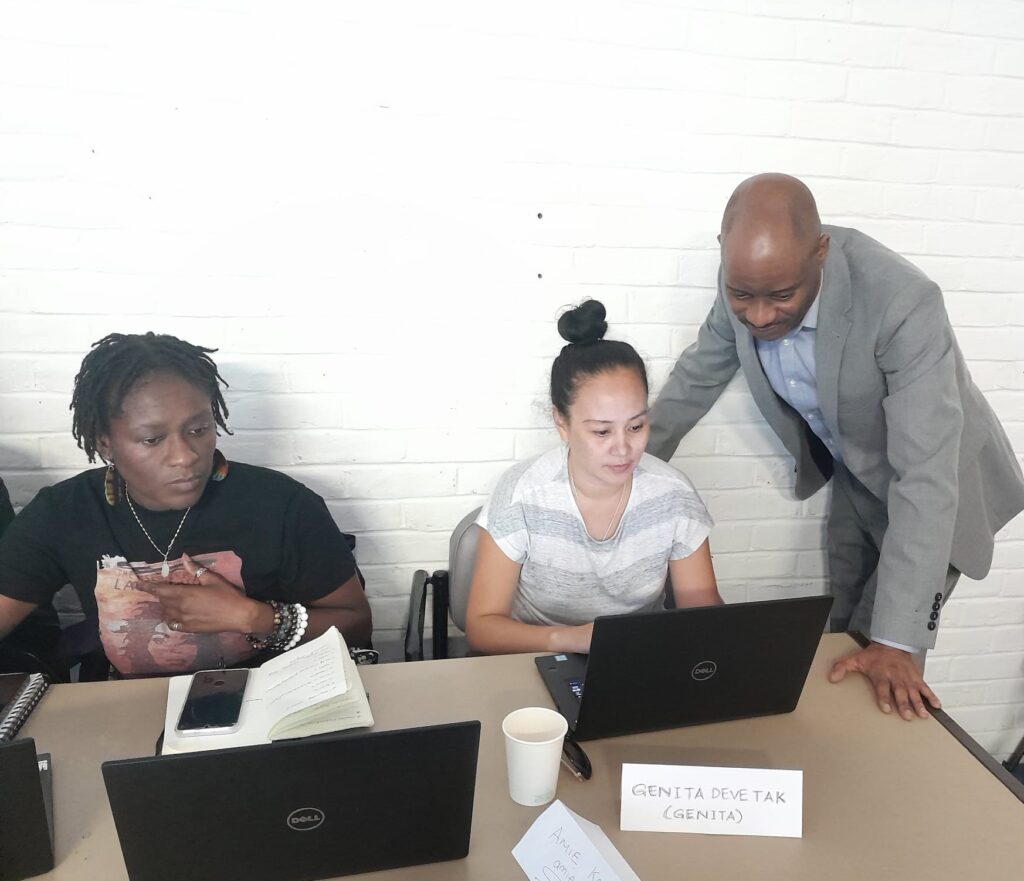
NHS Digital worked closely with the National Digital Inclusion Network to recruit participants aged between 18-76 for the usability testing on the NHS App and website.

The organisations involved are:

  1. IFB Gaming
  2. Learn For Life
  3. Smartlyte

During the research, we explored people’s attitudes, beliefs and experiences around coronavirus testing, the pandemic as a whole and how this affected day-to-day living. We explored the concept of taking part in regular coronavirus testing, even without having symptoms and the barriers that people face when trying to access these services. Finally, we looked at the NHS website and some new content about testing, to see how easy or difficult this information was to digest and understand.

The Usability Tests were conducted virtually via Microsoft Teams with a focus on Black, Asian, and other Minority groups in the West Midlands, London & South East, and Sheffield.

It was a really useful experience to be able to contribute to such vital research which will have a positive impact on communities around the UK

Hayley Nelson BEM (Learn For Life Enterprise, Sheffield)


Usability Testing Result

The research has had a significant outcome on how we approach learning and digital inclusion at IFB Gaming, as it exposes elements of the Hidden Middle (proposed by Future Dot Now), and it resonates with the five key skills of the government’s Essential Digital Skills Framework. The research has also impacted research design at the NHS.

Through this feedback, Empowering Futures was also born at IFB. Our social and planetary initiative focused on eradicating digital exclusion from the UK.

Hot off the press! “Empowering Futures”

In an era where technology continues to redefine our lives, the importance of digital literacy and empowerment cannot be overstated. The digital world presents endless opportunities, from connecting with others to accessing vital information and advancing our careers. Recognising this, IFB Gaming is excited to announce the introduction of Get Online Week’s Empowering Futures.

IFB Gaming and Empowering Futures:

At IFB Gaming, we understand the transformative power of the digital realm, especially in the realm of gaming, healthcare, education and public online services.

As we enter the age of technological innovation, digital skills are increasingly becoming essential for personal and professional growth.

Empowering Futures aligns perfectly with our mission to empower voluntary organisations and small businesses to manifest a connected nation where everyone can fully participate and reach their full potential during technology adoption maturity and beyond.

Empowering Futures offers a wide range of events, workshops, and resources designed to equip voluntary organisations and small businesses with the knowledge and tools they need to thrive in the digital age.

IFB Gaming is proud to champion this initiative and is committed to supporting and encouraging everyone to harness the power of technology.

Why Participate or Join Empowering Futures:

Empowering Futures is a unique initiative designed to expand your digital horizons, regardless of the size of your organisation. The initiative will support you to future-proof your organisation and to make the best out of the numerous opportunities presented by technology or digital.

Here are some reasons why you should consider joining Empowering Futures:

  1. Boost Your Ream’s Digital Skills: Learn from experts in various fields to enhance your people’s knowledge and gain practical skills that can elevate your online presence.
  2. Networking Opportunities: Connect with like-minded individuals, professionals, and organisations who share your passion for eradicating digital inclusion. Build valuable relationships that can open doors to new opportunities.
  3. Inclusivity: Empowering Futures is committed to promoting and advocating for digital inclusion and diversity at all levels of the society.
  4. Stay Updated: Stay up-to-date with the latest trends, technologies, policies and opportunities and gain insights from digital inclusion industry leaders and pioneers.

Recommended Reading:

Press Release: Empowering Futures 2023 in London

For more details on Empowering Futures event and to get a sneak peek at what to expect, we highly recommend reading the event’s press release. To access the press release, please visit the official Get Online Week’s Empowering Futures website or contact the team directly.

The official website provides a comprehensive overview of the event, including the schedule, featured speakers, workshops, and registration details.

What is Get Online Week?

Get Online Week is championed by Good Things Foundation. The campaign started in 2007 and it is currently in its 16th year. Good Things Foundation is on a mission to fix the digital divide, increasing awareness of digital exclusion and the pillars to tackle it: access to devices, data and digital skills training.

Every year Get Online Week has enabled people at risk of digital exclusion and data poverty to learn the Essential Digital Skills (Future Dot Now) and take back control of their lives and work during technology adoption maturity and beyond.

Conclusion:

Together, we can shape a future where technology empowers and enriches our lives.

Don’t miss out on this exciting opportunity to learn, connect, and grow in the digital age.

Don’t forget, whether you are representing a bank, retailer, telecommunications, charity or a community organisation, everybody can participate during Get Online Week by following these three steps.

Upcoming Events