IFB Gaming

Loading

Why Small Organisations Need an AI Policy

IFB Gaming · Digital Inclusion

Your team is already using AI. The question is whether you’ve talked about it.

Most small organisations don’t have an AI policy. Not because they don’t care, but because the whole thing sounds like it belongs to someone bigger.

Let me start with something I’m fairly sure is true about your organisation, even though we may never have met.

Someone on your team has used AI this week. Maybe they asked a chatbot to tidy up a funding bid. Maybe a volunteer used it to summarise a long set of notes, or to word a tricky email more gently. They probably didn’t mention it. They almost certainly didn’t think they were doing anything that needed mentioning.

That’s the thing about AI in community work. It didn’t arrive with an announcement. It just quietly turned up, one helpful shortcut at a time.

And yet, when I talk to small charities, hubs, and community groups, hardly any of them have an AI policy. Not because they don’t care, these are some of the most careful, values-driven people I know. It’s because the words “AI policy” sound like they belong to a corporation with a legal department and a compliance team. For an organisation already doing three jobs with one pair of hands, it lands as one more impossible thing on a list that’s already too long. So it gets quietly moved to “later.”

The trouble is, AI doesn’t wait for later.

The risk isn’t the technology. It’s everyone guessing on their own.

When there’s no agreed approach, every person makes their own call, in the moment, with nothing to guide them. One volunteer pastes a service user’s personal details into a free tool, not realising where that information goes. A staff member sends out something an AI wrote that nobody quite checked. Nobody meant any harm. They were trying to help, and they were doing their best with no map.

That’s the real issue. Not robots, not science fiction. Just good people making inconsistent decisions because no one has had the conversation out loud.

And in our world, digital inclusion, that matters more than most. The people we support need to know they are safe with us. Trust is the whole foundation of the work. An AI policy isn’t red tape. It’s part of how you keep that trust.

And no, a downloaded template won’t fix it

I know what the internet suggests: grab a ready-made AI policy, swap in your logo, job done.

Except we both know how that ends. A policy borrowed from a tech firm or a giant charity doesn’t fit a small community organisation, and everyone can feel it. It speaks a language your team doesn’t use. It worries about things you’ll never face and stays silent on the things you deal with every day. So it goes in a folder, unread, protecting no one. A policy nobody understands isn’t protection. It’s just paperwork.

What you actually need is the opposite of that. Something short. Something in plain words. Something that sounds like your organisation, that a brand-new volunteer could read on their first morning and genuinely follow.

Here’s the part that surprises people

Writing a policy that fits you is far more within reach than it sounds.

You don’t need to be a lawyer. You don’t need a technical background. You don’t need to understand what’s happening inside the machine. The most important thing is already in the room with you: your values, your understanding of the people you serve, and a clear way to turn those into something your whole team can stand behind.

That last part, turning what you already believe into a policy that actually works, is the bit people get stuck on. It’s also the bit we love helping with.

Write yours, in one session

The Write Your Own AI Policy workshop helps community organisations create a clear, practical AI policy in a single two-hour session. Plain English, no jargon, no legal background needed. You leave with a real draft in your own words.

See the workshop →

Digital Inclusion Works Better When a Place Works Together: A Look at Good Things’ Evidence

New positioning paper

Digital inclusion works better when a place works together

Our new positioning paper shows how the Stage Index supports a place-based approach.

We’ve written a short positioning paper for councils and local partners, and we wanted to introduce it here.

It builds on recent research from Good Things Foundation, Strengthening a place-based approach to digital inclusion, which makes a simple but important point: tackling digital exclusion in a place works best when local partners act as one coordinated system, not as a scatter of separate projects. That means a shared vision, shared leadership, a shared way of reaching the people who are excluded, and a shared way of measuring whether things are actually improving.

Where our toolkit fits

Our paper looks honestly at where the IFB Gaming Stage Index helps with that, and where it doesn’t. We’re clear about one thing up front: the Stage Index is not a partnership tool, and it doesn’t replace Good Things Foundation’s. The two do different jobs, and they work well side by side.

  • Good Things Foundation’s tool helps a place understand how well its partners are working together.
  • Our Stage Index gives those same partners a shared, resident-level evidence base to work together around.
  • Together, they help a place see who is excluded, agree what to do, and prove that it is making a difference.

The paper maps the Stage Index against the four areas the research highlights, and is honest about which ones a measurement tool can genuinely support and which depend on leadership and funding that no tool can supply. If you work in a council or a local partnership, we think it’s a useful, practical read.

How to get the paper

The full positioning paper is available on request, we’re happy to send it over.

Head to our contact page and, in the message field, just mention you’d like the place-based positioning paper.

We’ll get it straight back to you, and we’re always glad to talk about how it might apply to your area.

Contact us

From Devices to Impact Beta has been extended to 30 June

Beta now open until 30 June

We’re extending the Toolkit Beta to 30 June

A little more time to try the Digital Inclusion Toolkit and tell us what you think.

Good news: we’re keeping the Digital Inclusion Toolkit beta open a little longer. The new deadline is 30 June (it was 14 June).

Here’s why. The National Digital Inclusion Network is holding its first in-person meeting in London, and a lot of the people we most want feedback from, frontline workers, hub teams, and community organisations, are going to be in the room. It made little sense to close the beta just before sitting down with the very people the toolkit is built for. So we’re holding it open until the end of the month, so everyone we meet has a proper chance to try it and tell us what they think.

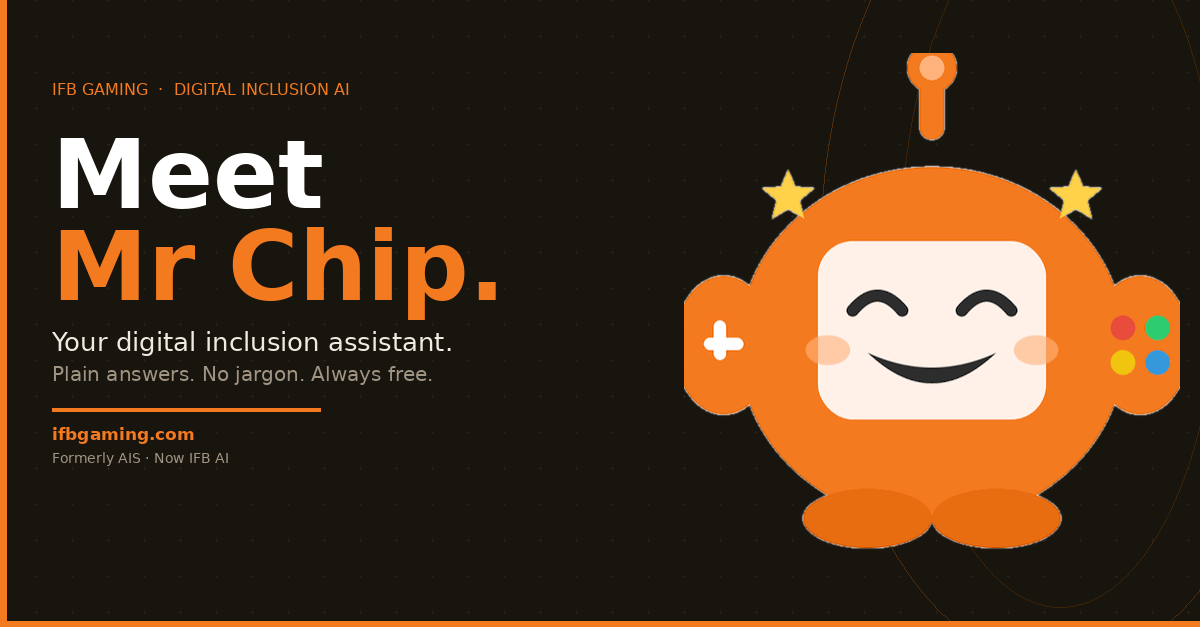
Mr Chip says

“More time to have a go. No login, nothing technical, just try it and tell us what helps. Your honest feedback is what makes it better.”

If you’ve already taken part, thank you. Your feedback is shaping where this goes.

If you haven’t yet, this is your window. The beta is free, there’s no login, and you don’t need to be technical. Have a look, use it with the people you support, and tell us what works and what doesn’t. That honest feedback is exactly what makes the finished toolkit genuinely useful, rather than just another thing nobody asked for.

We’ll be back at the end of June with what we’ve learned and what’s next.

Strengthening Place-Based Digital Inclusion: Why Community-Led Support Matters

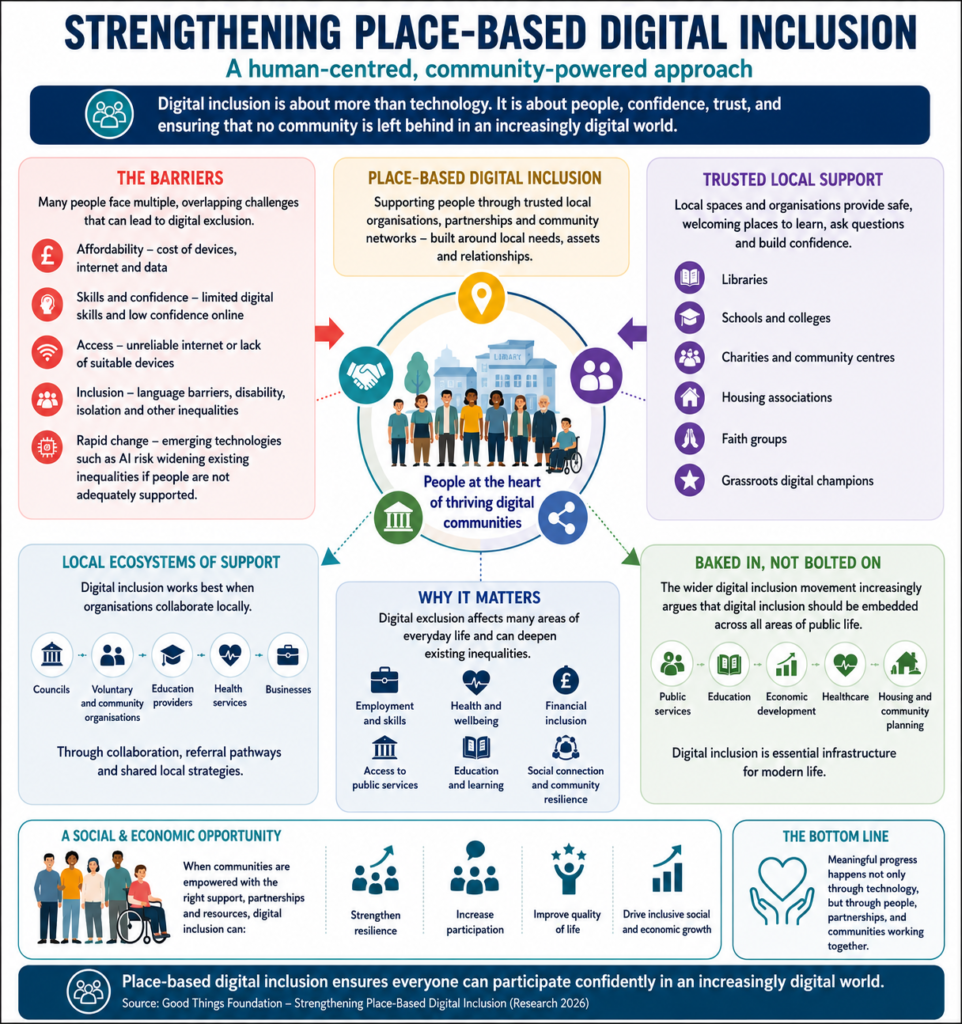
Digital inclusion is no longer just about access to devices or internet connectivity. Increasingly, it is about people, confidence, trust, and ensuring that no community is left behind in an increasingly digital world.

Recent research from Good Things Foundation highlights the importance of “place-based digital inclusion” — an approach focused on supporting people through trusted local organisations, partnerships, and community networks rather than relying solely on national or technology-led solutions.

The research recognises that many people still face significant barriers in today’s digital society. These challenges include affordability, lack of digital skills, low confidence online, language barriers, disability, social isolation, and limited access to support. As digital services continue to expand rapidly, there is growing concern across the wider digital inclusion sector that emerging technologies, including AI, could deepen existing inequalities if communities are not adequately supported.

One of the strongest messages from the research is that digital inclusion works best when support is rooted within communities. Libraries, schools, charities, housing associations, faith groups, community centres, and grassroots organisations often provide the trusted environments people need to learn, ask questions, and build confidence without fear or judgement.

The research also places strong emphasis on local ecosystems of support. Effective digital inclusion is rarely delivered by one organisation alone. Instead, it depends on collaboration between councils, voluntary organisations, educators, health services, businesses, and community partners working together through referral pathways and shared local strategies.

This local and human-centred approach matters because digital exclusion affects far more than internet access. It impacts employment opportunities, access to healthcare, financial wellbeing, education, civic participation, and social connection. In many cases, digital exclusion can deepen wider social and economic inequalities.

Across the wider digital inclusion movement, there is increasing recognition that digital inclusion should be “baked in, not bolted on.” In practical terms, this means embedding digital inclusion into public services, education, economic development, healthcare, housing, and community planning from the outset rather than treating it as a separate or temporary intervention.

Importantly, the research presents digital inclusion not simply as a technical challenge, but as a long-term social and economic opportunity. When communities are empowered with the right support, partnerships, and resources, digital inclusion can strengthen resilience, increase participation, improve quality of life, and support more inclusive economic growth.

As technology continues to evolve rapidly, the need for trusted community-based support has never been more important. Place-based digital inclusion reminds us that meaningful progress happens not only through technology, but through people, partnerships, and communities working together to ensure that everyone can participate confidently in an increasingly digital world.

Source: Good Things Foundation, “Strengthening Place-Based Digital Inclusion”

Unveiling User Perspectives through Focus Groups and Usability Testing

Welcome to our latest update! In this edition, we dive into the world of user research with a closer look at two essential methods: Focus Groups and Usability Testing. Discover how these techniques unlock valuable insights into user perspectives and help refine the user experience of tech products. Let’s explore the power of understanding user opinions and improving usability. Read on!

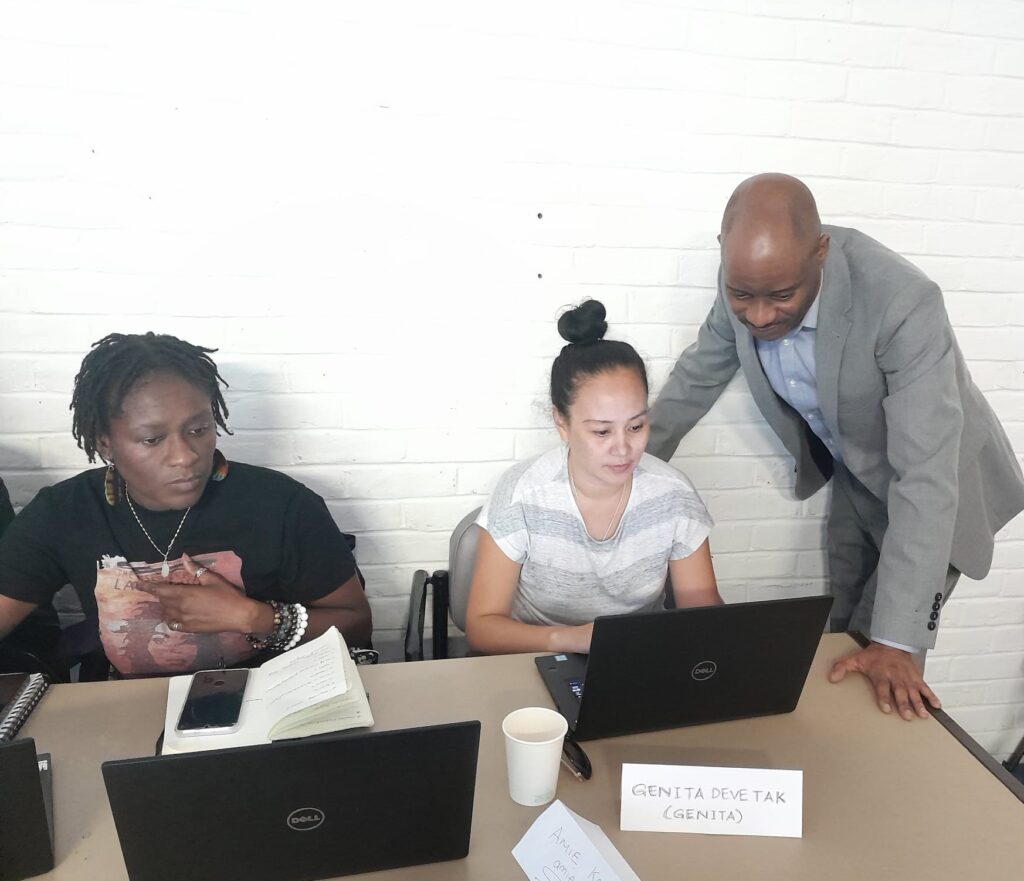
A focus group is a qualitative research method in which a small, diverse group of participants (usually 6-12 people) is brought together to discuss a specific topic, product, or concept in a structured, facilitated discussion. The purpose of a focus group is to gather insights, opinions, and perceptions from participants about the subject under discussion. It is often used to explore people’s attitudes, beliefs, and feelings, as well as to generate ideas and uncover issues related to a particular topic.

Usability testing, on the other hand, is a method used to evaluate the user-friendliness and effectiveness of a product, typically a software application, website, or device. Usability testing involves having participants (usually individual users) perform specific tasks using the product while their interactions and feedback are observed and recorded. The primary goal is to identify usability issues, such as difficulties in navigation, user interface design, and task completion, to improve the product’s overall user experience.

In some cases, a combination of both methods may offer the most comprehensive insights into tech use.

User Research Methods

Focus groups and usability testing are both valuable methods for collecting data about tech use, but they serve different purposes and have distinct advantages. Here’s a comparison of the two:

Focus Groups:

  1. Diverse Perspectives: Focus groups are excellent for gathering diverse opinions and insights. They bring together a small group of participants who can discuss their experiences, preferences, and attitudes regarding tech use.
  2. Idea Generation: They can be instrumental in generating new ideas and understanding the broader context in which technology is used. Participants can share their thoughts and brainstorm solutions.
  3. Perceptions and Feelings: Focus groups are useful for exploring participants’ perceptions, feelings, and social dynamics related to technology. This is especially valuable for understanding the emotional aspects of tech use.
  4. Cost-Effective: They are generally cost-effective compared to usability testing, as they involve fewer participants and can uncover a wide range of issues in a single session.

Usability Testing:

  1. Task-Oriented: Usability testing is task-oriented and focuses on how users interact with technology to complete specific tasks. It provides detailed insights into the user experience and identifies usability issues.
  2. Objective Data: Usability testing collects objective data, often through observations and metrics like task completion times and error rates. This data is valuable for making concrete improvements to the technology.
  3. Identification of Usability Issues: It is highly effective at identifying usability problems and bottlenecks in the user interface. This is critical for refining the user experience and optimising tech use.
  4. Iterative Improvement: Usability testing is well-suited for iterative design and development. It provides actionable feedback that can be used to make incremental enhancements to a tech product.

Focus groups are best for gathering qualitative data on user opinions, perceptions, and social dynamics related to tech use. They are excellent for idea generation and understanding the broader context. Usability testing, on the other hand, is task-oriented and provides objective, quantitative data on how users interact with technology. It excels at identifying usability issues and supporting iterative improvements.

Both methods are valuable for different research objectives and can provide valuable information for product development and decision-making.

The choice between focus groups and usability testing depends on your research goals. If you want to understand user opinions and experiences broadly, focus groups are a good choice. If you’re focused on identifying and solving specific usability problems, usability testing is more appropriate. In some cases, a combination of both methods may offer the most comprehensive insights into tech use.

Working with the NHS: Test & Trace with community groups

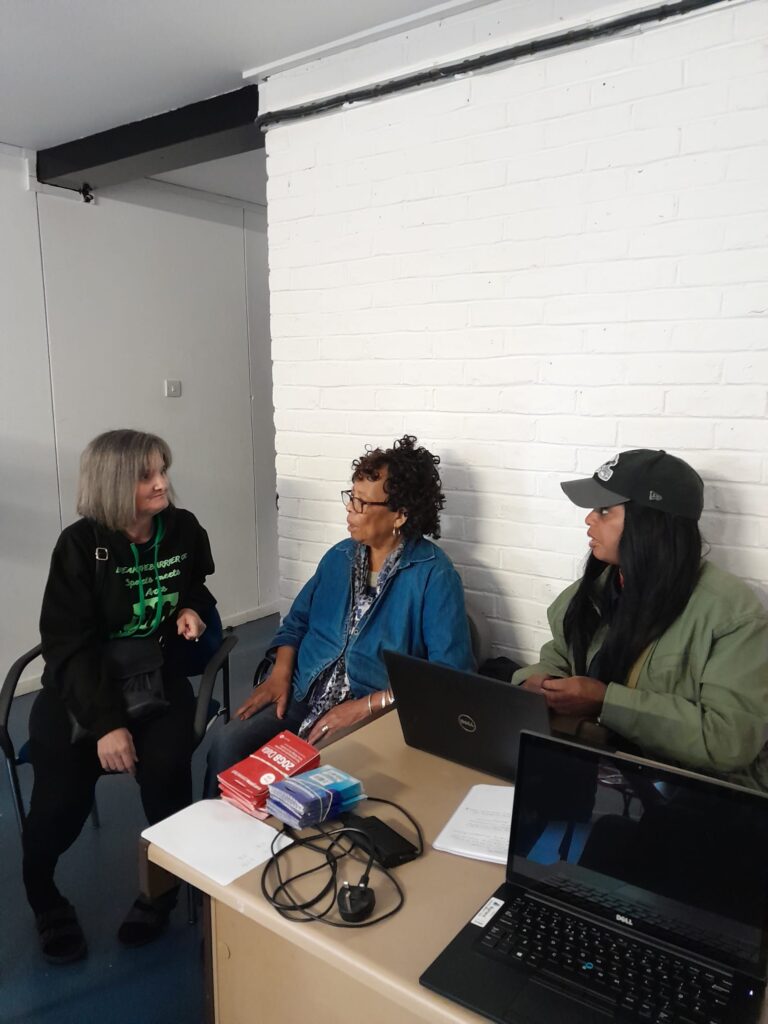
NHS Digital worked closely with the National Digital Inclusion Network to recruit participants aged between 18-76 for the usability testing on the NHS App and website.

The organisations involved are:

  1. IFB Gaming
  2. Learn For Life
  3. Smartlyte

During the research, we explored people’s attitudes, beliefs and experiences around coronavirus testing, the pandemic as a whole and how this affected day-to-day living. We explored the concept of taking part in regular coronavirus testing, even without having symptoms and the barriers that people face when trying to access these services. Finally, we looked at the NHS website and some new content about testing, to see how easy or difficult this information was to digest and understand.

The Usability Tests were conducted virtually via Microsoft Teams with a focus on Black, Asian, and other Minority groups in the West Midlands, London & South East, and Sheffield.

It was a really useful experience to be able to contribute to such vital research which will have a positive impact on communities around the UK

Hayley Nelson BEM (Learn For Life Enterprise, Sheffield)


Usability Testing Result

The research has had a significant outcome on how we approach learning and digital inclusion at IFB Gaming, as it exposes elements of the Hidden Middle (proposed by Future Dot Now), and it resonates with the five key skills of the government’s Essential Digital Skills Framework. The research has also impacted research design at the NHS.

Through this feedback, Empowering Futures was also born at IFB. Our social and planetary initiative focused on eradicating digital exclusion from the UK.

Upcoming Events