IFB Digital Inclusion Toolkit Featured on Community Southwark | Real-Time Impact Measurement
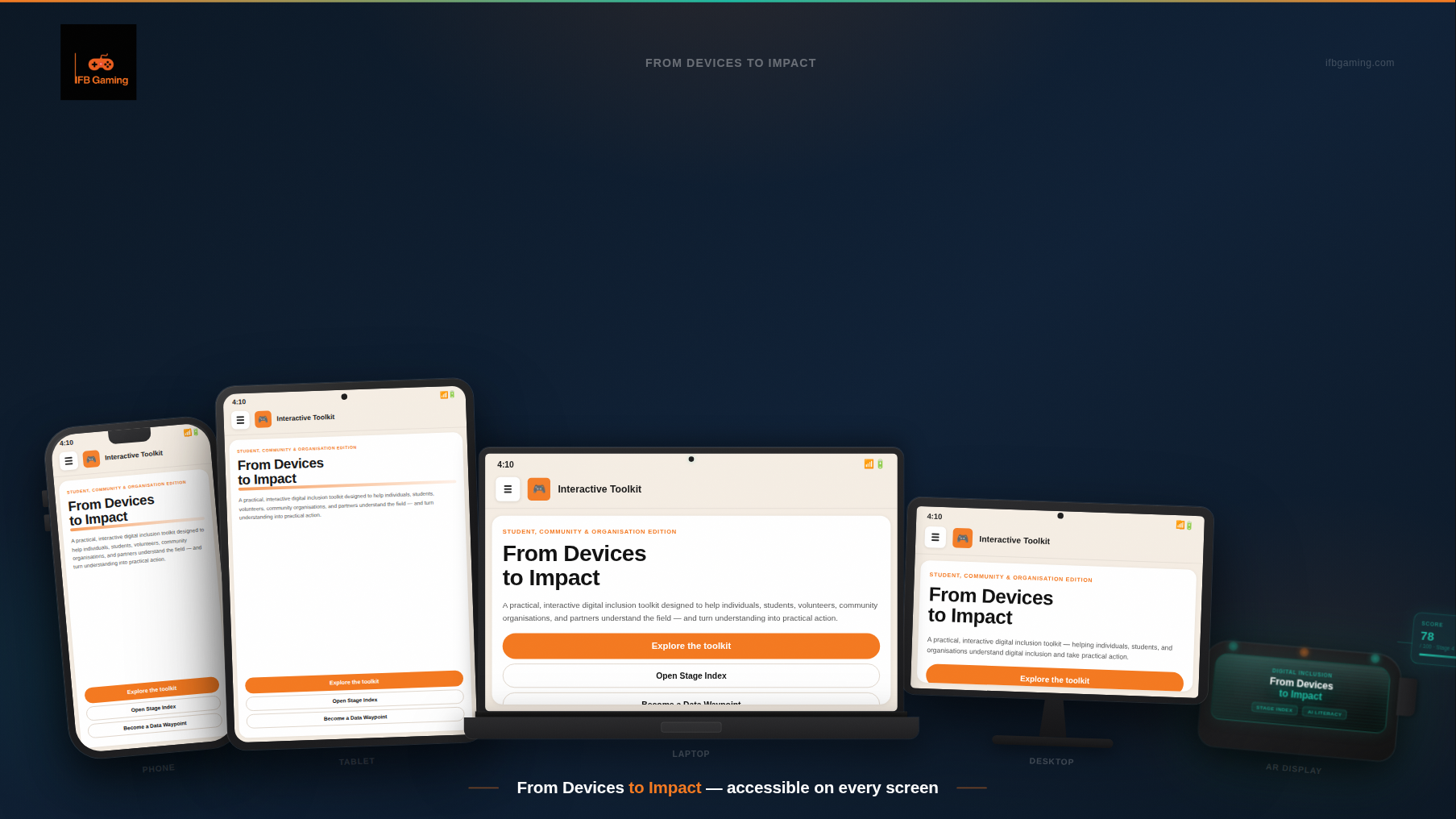
We are pleased to share that the IFB Digital Inclusion Toolkit has been featured on the Community Southwark website—marking an important step in making the toolkit accessible to Voluntary and Community Sector (VCS) organisations across the borough.
This recognition reflects a growing need within the sector: Not just to deliver digital inclusion initiatives, but to understand and improve their impact in real time.
Why This Matters
Across the UK, many organisations are doing vital digital inclusion work. However, they are often supported by tools that:
measure outcomes retrospectively
prioritise reporting over delivery
overlook the needs of those on the front line
The IFB toolkit takes a different approach.
It is designed to:
support live measurement during delivery
provide immediate, practical insight
empower students, volunteers, and community practitioners as active users—not just organisations
By focusing on those delivering the work, the toolkit strengthens the Digital Champion model that underpins much of the national digital inclusion delivery.
From Access to Insight
This feature on the Community Southwark platform signals more than visibility; it represents alignment with a shared ambition:
👉 To move from simply delivering support 👉 To understand what works, as it happens
For local organisations, this means:
stronger evidence for funding
improved service delivery
greater confidence in decision-making
What Happens Next
With ongoing feedback and registrations from users and partners helping to shape its development.
We will continue to:
refine usability and clarity
build real-world case studies
ensure the tool delivers value to those who use it daily
narrow services and opportunities to a location
Explore the Toolkit
You can view the IFB Digital Inclusion Toolkit via Community Southwark here.
Work With Us
If you are a local authority, funder, or organisation interested in advancing digital inclusion through real-time insight and ethical measurement, we would welcome a conversation.
IFB Gaming remains committed to building practical, community-led solutions that not only expand access but also strengthen understanding, participation, and impact.
Across the world, gaming is often viewed primarily as entertainment — a pastime enjoyed by millions of players across consoles, personal computers, and mobile devices. Yet gaming is much more than a form of leisure.
At its core, gaming is a powerful system for learning, participation, and problem-solving.
The same principles that make games engaging — curiosity, challenge, progress, responsive feedback, and collaboration — can also be applied to help communities build confidence, develop digital skills, and participate more fully in an increasingly digital society.
At IFB Gaming, we believe that gaming principles can play an important role in shaping the future of digital inclusion and community empowerment.
Let’s break it down.
The Participation Challenge
Digital inclusion has traditionally focused on three key challenges:
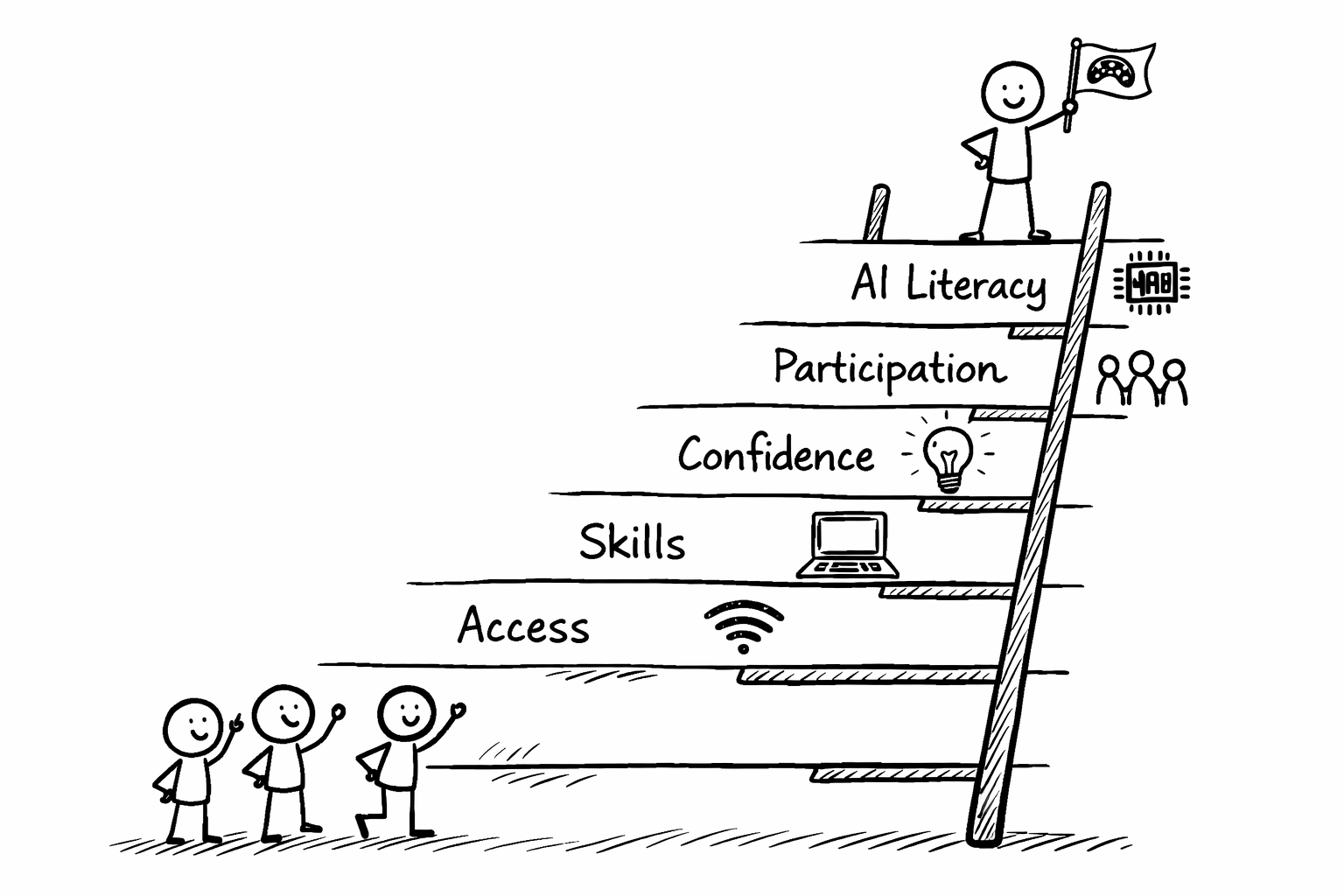
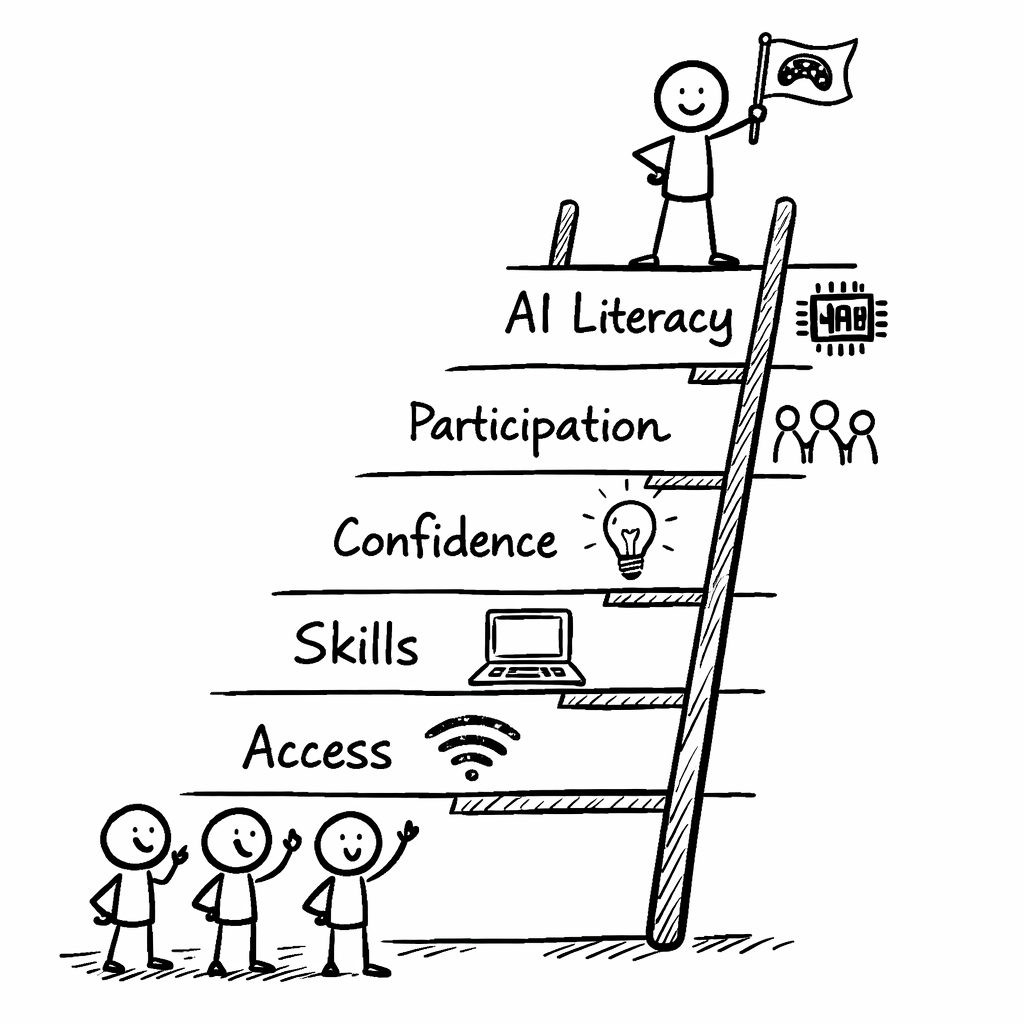
• access to devices and connectivity • digital skills and literacy • confidence using online services
Over the past decade, governments, charities, and community organisations have worked tirelessly to address these barriers. Their efforts have helped millions of people gain access to the internet and develop the skills needed to navigate the digital world.
However, access and skills alone do not guarantee participation.
Many people still feel uncertain, intimidated, or disconnected from digital systems. For some, technology can feel like an unfamiliar environment — one that is difficult to navigate without guidance.
This is where gaming offers an important insight.
Games succeed because they encourage participation rather than demand expertise.
Players are invited to explore, experiment, and progress step by step.
Failure is part of the process, and progress is celebrated.
Learning Through Play
One of the most powerful aspects of gaming is its ability to support learning through play.
Games are designed to introduce new challenges gradually. Players start with simple tasks, build confidence through practice, and unlock more complex challenges as their skills develop.
This structure mirrors effective learning environments.
In digital skills programmes, for example, participants may need to learn how to:
create an email account
engage through chat
navigate online services
recognise online risks
access digital health services
apply for jobs online
When these activities are presented as technical tasks, they can feel intimidating. But when they are structured as missions, levels, or achievements, they become more engaging and motivating.
Gamification — the use of game mechanics in non-game contexts — can therefore transform digital learning into a progressive and confidence-building journey.
Gaming as a Gateway to Digital Confidence
For many people, gaming represents their first interaction with digital environments.
Even simple games introduce players to key digital concepts:
navigating virtual spaces
solving problems
collaborating with others
managing digital systems
These experiences can build confidence that extends far beyond gaming itself.
Young people who play games often develop skills in strategic thinking, communication, and problem-solving. Older adults who explore digital games may gain confidence using devices and navigating digital interfaces.
Gaming can therefore act as a gateway into broader digital participation.
Community Engagement Through Gamification
Beyond individual learning, gaming principles can also strengthen community engagement.
Community programmes often struggle with participation. Workshops, meetings, or training sessions may be valuable but difficult to sustain without ongoing motivation.
Gamification can help address this challenge by introducing elements such as:
challenges and missions
progress tracking
collaborative achievements
recognition and rewards
These elements encourage participants to remain engaged while celebrating progress and shared achievements.
For example, digital skills programmes can introduce learning pathways where participants unlock new levels as they complete training modules. Community challenges can encourage residents to contribute to local initiatives, share knowledge, or participate in digital learning events.
By transforming participation into a shared journey, gamification can help strengthen community bonds and collective motivation.
Gaming in the Age of Artificial Intelligence
As emerging technologies such as artificial intelligence become embedded in everyday digital systems, the need for inclusive approaches to digital learning will only increase.
AI-powered services are already influencing areas such as:
healthcare
education
employment
financial services
information access
Understanding these technologies requires more than basic digital skills. Individuals must develop confidence navigating complex digital environments and questioning automated outputs.
Gaming and gamification can play an important role in supporting this transition.
By creating safe, interactive environments where people can explore technology without fear of failure, gaming can help communities build the confidence needed to engage with emerging technologies.
From Entertainment to Empowerment
Gaming is often misunderstood as a purely recreational activity.
Yet when we examine the underlying mechanics of games — exploration, feedback, collaboration, and progression — we see a powerful framework for human engagement and learning.
When these principles are applied thoughtfully, gaming can support:
digital inclusion
community learning
civic participation
technology confidence
social connection
In this sense, gaming is not simply about entertainment.
It is about empowerment through participation.
The Role of IFB Gaming
At IFB Gaming, our work explores how gaming principles and emerging technologies can support communities in navigating the digital world.
Through initiatives focused on digital inclusion, community learning, and responsible technology engagement, we aim to demonstrate how gaming can become a tool for education, participation, and social impact.
Our work recognises that digital inclusion is not only about providing access to technology.
It is about helping individuals and communities develop the confidence, curiosity, and capability to shape their own digital futures.
Looking Ahead
As society continues to evolve in response to rapid technological change, new approaches to learning and engagement will become increasingly important.
Gaming — with its emphasis on participation, experimentation, and progress — offers a powerful model for how communities can learn and grow together.
By embracing the principles of play, collaboration, and discovery, we can create more inclusive pathways into the digital world.
Because when people feel confident to explore, learn, and participate, they do more than access technology.
Artificial Intelligence (AI) is rapidly becoming part of everyday digital life.
From search engines and customer service chatbots to healthcare systems, online learning platforms, and workplace tools, AI is quietly shaping how information is delivered and how decisions are made.
For many people, this shift is exciting. AI promises greater efficiency, smarter tools, and new ways of solving complex problems.
But for communities already facing digital barriers, the rise of AI raises an important question:
What happens when digital inclusion moves into the age of artificial intelligence?
Digital Inclusion Has Entered a New Phase
For many years, digital inclusion efforts focused on three core challenges:
• access to devices and connectivity • basic digital skills • confidence using online services
Organisations across the UK and around the world have made enormous progress in helping individuals access the internet and develop the skills needed to participate in a digital society.
However, as AI systems become embedded in digital services, the nature of digital inclusion is beginning to change.
Digital participation will increasingly require people to understand how automated systems generate information, make recommendations, and sometimes make decisions.
This represents a new stage in the digital inclusion journey.
When Digital Services Become AI-Driven
Artificial intelligence is already influencing many services people rely on every day.
Examples include:
automated customer service systems
job recruitment screening tools
recommendation engines on digital platforms
AI-powered educational tools
decision-support systems in healthcare and finance
While these systems can improve efficiency and accessibility, they also introduce new challenges.
Users may not always understand:
where the information is coming from
how decisions are being made
whether an AI-generated answer is reliable
how their personal data is being used
Without the right support, individuals who have recently become digitally included may find themselves facing a new layer of complexity.
The Role of Community Organisations
Community organisations have long played an essential role in supporting digital inclusion.
Libraries, charities, community centres, and local support networks often act as trusted intermediaries between digital systems and the people who use them.
As AI becomes more widespread, these organisations may become equally important in helping communities understand and navigate intelligent technologies.
This could involve helping individuals:
understand what AI tools are and how they work
recognise AI-generated content
verify information produced by automated systems
protect personal data when using AI-powered services
explore how AI might support learning, employment, or creativity
In this sense, community organisations may increasingly act as AI translators — helping people interact confidently with emerging technologies.
AI Literacy as a Community Skill
Just as digital literacy became a key skill over the past decade, AI literacy may soon become equally important.
AI literacy does not require everyone to become a programmer or data scientist.
Instead, it focuses on helping people understand:
what AI can and cannot do
how AI systems learn from data
where bias or errors might occur
how to question and verify automated outputs
This knowledge helps individuals remain informed and confident users of digital systems.
Creating Safe Spaces to Explore AI
One of the most effective ways to support communities in understanding new technologies is through safe, supportive environments where people can explore and ask questions.
Community workshops, digital hubs, and learning programmes can provide opportunities for people to experiment with AI tools while receiving guidance from trusted facilitators.
These environments can help individuals:
explore AI-powered tools without pressure
understand both the opportunities and risks of AI
develop confidence interacting with intelligent systems
see how AI might support everyday tasks
The goal is not simply to promote AI adoption, but to ensure that people can engage with technology critically, safely, and confidently.
Looking Ahead
Artificial intelligence will likely continue to transform many aspects of digital life in the years ahead.
As this transformation unfolds, digital inclusion efforts must evolve alongside it.
Ensuring that communities can understand and navigate AI-powered systems will be essential to maintaining equitable access to digital services and opportunities.
At IFB Gaming, we are interested in exploring how emerging technologies like artificial intelligence intersect with community learning, digital inclusion, and the broader digital society.
The future of digital inclusion may not only be about getting people online.
It may also be about helping people understand the intelligent systems that increasingly shape the online world.
On behalf of everyone at IFB Gaming, we want to say a heartfelt THANK YOU for your generous contribution to our Empowering Futures campaign.
Because of you, someone now has access to:
A working SIM card with data
Digital tools and mentoring
A chance to build a brighter, connected future
Your support is more than a donation—it’s a lifeline. You’re helping break barriers and bridge the digital divide for people who need it most. We truly couldn’t do this without you.
We’ll keep you updated on the lives you’re changing. Until then, know that you’re part of a growing community rewriting what’s possible.
In a world driven by technology, true innovation is not just about creating new tools—it’s about ensuring those tools empower people. Human-focused innovation puts people at the center of problem-solving, ensuring solutions are accessible, inclusive, and impactful. At IFB Gaming, we embody this approach by leveraging gaming and digital inclusion to bridge the technology gap for underserved communities.
The Challenge: Digital Exclusion
Millions worldwide face digital exclusion, lacking access to devices, internet connectivity, and digital literacy. This gap is more than just technological—it’s social and economic. Without digital access, individuals struggle to apply for jobs, access education, or even communicate effectively. This is where human-focused innovation comes into play, ensuring that no one is left behind in an increasingly digital world.
IFB Gaming’s Approach: A Use Case in Action
One of our key initiatives at IFB Gaming is Empowering Futures, where we provide free SIM cards, devices, and digital skills training to refugees, low-income individuals, and those with no recourse to public funds through Community Organisations. This initiative isn’t just about handing out technology—it’s about ensuring people can use it to improve their lives.
Take, for example, Amira, a refugee who arrived in the UK with limited digital skills. Without internet access, she struggled to find housing, apply for jobs, or connect with her family back home. Through our initiative, Amira received a SIM card, free digital literacy training, and guidance on using online job platforms. Within months, she secured a stable job, regained financial independence, and started building a new life. This transformation was possible because the innovation wasn’t just technical—it was human-focused.
The Impact: Technology as an Equalizer
By focusing on people first, we turn technology into an equalizer rather than a barrier. Our work at IFB Gaming demonstrates that gaming, connectivity, and digital literacy can go beyond entertainment; they can drive social change. Whether it’s through digital training, gaming for education, or sustainable tech access, we ensure that innovation works for everyone, not just a privileged few.
Scaling Human-Focused Innovation
The future of technology must be built with people at its core. At IFB Gaming, we are committed to expanding our efforts, collaborating with partners, and creating even more impact-driven solutions that make digital inclusion a reality for all.
Interested in collaborating or supporting our mission? Join us in shaping a more inclusive digital world.
This Christmas, the message of connection has never been more meaningful. Virgin Media O2’s new festive advert, “Snowing SIMs”, captures the spirit of giving by highlighting their incredible SIM card initiative through the National Databank.
At IFB Gaming, we are proud to be part of this inspiring mission, ensuring that no one is left behind in today’s digital world.
Tackling Digital Inclusion through the National Databank
The National Databank is like a foodbank but for mobile data. The National Databank provides free mobile SIM cards for people who can’t access the internet. Read about the National Databank on Good Things Foundation’s website.
Through our membership with the National Databank, IFB Gaming plays a pivotal role in distributing free SIM cards to those most affected by data poverty in London.
Together, we’re not just delivering connectivity—we’re creating opportunities, fostering inclusion, and paving the way for a digitally empowered future.”
Digital inclusion: Free SIM Cards
For many, the festive season is a time of joy and togetherness. But for others, particularly those facing digital exclusion, it can be a stark reminder of isolation.
In London alone, thousands struggle with data poverty, unable to access the internet for vital services, job opportunities, or simply to connect with loved ones.
Through our membership with the National Digital Inclusion Network, IFB Gaming has distributed free SIM cards to those who need them most. This includes individuals on low incomes, refugees, asylum seekers, people with English as a Second Language, British Sign Language Users, and others without recourse to public funds.
These SIM cards provide not just data, but a lifeline to the digital world—a tool to empower and uplift.
The Power of Connection Virgin Media O2’s “Snowing SIMs” campaign beautifully showcases how something as small as a SIM card can make a big difference. Whether it’s supporting someone in applying for a job, participating in an online class, or staying connected with loved ones, this initiative goes beyond technology—it is about creating opportunities, fostering inclusion, and preparing the UK for a future of technological maturity and beyond. Virgin Media O2 is at the forefront, driving this essential and transformative change.
Snowing Sims’ – Christmas Ad by Virgin Media O2
Digital Inclusion: A Mission for London and Beyond
At IFB Gaming, we’ve seen firsthand how access to data transforms lives. London is a city of opportunity, but for many, digital exclusion creates barriers to participation.
By working together with the National Databank and like-minded partners, we’re helping to break down these barriers, one SIM card at a time. Read about our recent “Empowering Futures” and “Winter Data Care” initiative on Community Southwark’s website.
How Can Your Organisation Benefit?
By joining the National Databank, your charity or community organisation can:
Distribute free SIM cards to support those facing digital exclusion.
Help individuals access essential online services, education, and employment opportunities.
Strengthen your community impact with a meaningful, practical solution to data poverty.
Learn new skills and ways of working.
Be part of a National movement focused on eradicating inequalities.
Break the silo walls and connect your voice to National discussions and development.
Future-proof your organisation with member-only events and a knowledge base.
Access the National Device Bank and diversify your funding opportunities.
Why Get Involved?
The National Databank is a simple, effective way to support your community and break down the barriers of digital exclusion.
At IFB Gaming, being part of this initiative has allowed us to connect countless individuals and organisations to life-changing opportunities, and we want to share this opportunity with you.
Get in Touch with IFB Gaming
Need guidance on how to join? Unsure where to start?
IFB Gaming offers consultations to help you understand the process and make the most of this incredible initiative. Together, we can ensure no one in our communities is left behind.
Let’s create a digitally inclusive future—one SIM card at a time. Reach out to us today to learn more about joining the National Databank!
This Christmas, as we embrace the joy of giving, let’s remember the power of connection. Together, we can continue to address digital exclusion and data poverty, ensuring a brighter, more inclusive future for all.
Video games have come a long way since the early binary instalments, the arcade system, and the first multiplayer trials at M.I.T. Today’s gaming consoles are basically portals to infinite social and entertainment worlds, just like social media.
As science and technology transform the way we live, the way we vote, and the way we do business, it is pivotal to resist the inclination that it will not transform the way we play.
E-sports is all about play, fun, networking and video gaming – It is competitive and collaborative video gaming.
In a previous update, here, the CEO imparted the ‘benefits of gaming and contemporary gaming consoles’, such as the Xbox One and PlayStation 4.
What is esports?
Once upon a time! Players converged at an agreed location and on a specified date to enjoy gaming. Today, players can coordinate and enjoy competitive and collaborative video gaming from the comfort of their sofas.
The phenomenon is enabled by technology adoption maturity and connected mediated technologies underpinned by the Web. This new way of organising and enjoying video games paved the way for electronic sports, popularly known as e-sports.
Esports or electronic sports is competitive multiplayer online gaming. Esports can be staged in front of a live audience and millions more online, as epitomised during the 2018 Winter Olympics in Korea. The 2018 Winter Olympics also manifested its capacity for reconciliation as North and South Korea put the past behind them to enjoy the event as a whole.
As a form of sport, esports has been brewing in the background for decades, and it is far from new or emerging. However, before imparting the economic benefits of esports, I believe it is imperative to open up on the barriers that hinder its manifestation, below:
The Barriers: Research, market penetration & tech-adoption maturity
1. Research
Game developers, such as Microsoft and Sony, have invested heavily in connected, immersive, and ubiquitous gaming constructs with relational themes. Similar to social media, people are connecting, learning, and innovating on a universal scale. While brands capitalised on the emerging trend, it was impractical for science due to the connected and multiverse dimensions in gaming, due to science protocols, and due to parenting. Nowadays, researchers include parents and guardians in their investigations and data collection processes.
Further, stereotyping in the past meant social exclusion, as knowledgeable players and specific genres were omitted from the discussion. This meant that while scholars continued to recruit and remove people from the spaces that define them for studies, a parallel form of community was in development, and brands could be part of the development.
2. Market penetration and data
While brands and multinationals transformed new audiences for competitive advantage, science and academia could not due to research protocols, evidence, and parenting. What we’ve witnessed so far are early penetration strategies by brands and organisations to establish a presence and voice in gaming communities. This is through hyper-branding, sponsorship, and advertising initiatives.
Chart showing the world’s top earners (Pic – Business Insider)
3. Technology-adoption maturity
Technology-adoption maturity simply refers to the period in human evolution associated with a holistic adoption and use of technology in daily life.
The digital-non-digital or social-technology mix magnifies complexities with contemporary gaming research and applied sciences. The gaming industry integrates unique and diverse industry sets, as well as sophisticated computer-mediated-communication infrastructures, held together by AI, the Cloud, and the Web. According to Gartner, the gaming industry is on course to become the largest single contributor to the entertainment and education industries.
The Benefits of E-sports
1. Economic benefits
According to the British Broadcasting Corporation, e-sports will generate more than £1bn in global revenue and almost double its global audience to nearly 600 million people by 2020. In a corresponding national report, Ukie estimates an increase in the UK audience to a staggering 8 million by 2019.
The anticipated and confirmed inclusion of esports at the 2018 Winter Olympics epitomises the national benefit of esports. The immediate economic benefits of esports fall under job creation, international relations, learning infrastructures, and new tourism.
2. Social Benefits
Like most sports events, e-sports impacts every level and culture that inhabits society. At a local level, e-sports may facilitate cohesion and integration in deprived areas of society. Video games are one of the favourite pastime activities for both children and adults.
Esports can play a pivotal role in sewing together broken social fabrics and bridging cultural and national barriers, as players can interact directly and learn in self-configured spaces with some freedom of operation.
3. Research and applied science benefits
Online gaming has been contributing to science for decades, and we also have our own game/citizen science project (Galaxy Zoo) at the University of Portsmouth. The manifestation of e-sports in a non-game context is particularly beneficial to science because it brings distinct industries together. Many of these industries would otherwise not enter any form of discussion if not for the maturity of technology adoption.
An international coalition of Game studies scholars has openly called for new and connected research methods that reflect the complexity and ambiguity of contemporary living and playing.
Esports to have a global audience of 600 million by 2030: Business Insider
Future of e-sports
Though esports present unique opportunities to engage and capture an untapped audience, it is not a substitute for traditional and outdoor play. E-sports is a unique way to reach excluded young people. In the near future, we should expect to see some esports in colleges, higher education institutions, and the workplace.
In recent years, the impacts of climate change have become increasingly evident, underscoring the urgent need for collective action on a global scale. From extreme weather events to rising sea levels, the consequences of climate change are being felt by communities and ecosystems around the world. In this blog, we explore why collective action on climate change is crucial and how we can work together to build a sustainable future for all.
Climate change is interconnected with other global challenges, including poverty, inequality, conflict, and health. Addressing climate change requires integrated approaches that consider the interconnectedness of these issues and seek to address their root causes through collective action.
As reported on Southwark council’s website, “Southwark is committed to meeting the challenge of the climate emergency as it opens enormous opportunities for the Borough, its residents and businesses”. But, only by working together can we effectively mitigate the impacts of climate change and create a sustainable future for generations to come.
Sustainable Restaurant Association
Consider our trailblazing hybrid work in Southwark and London: A Circular Approach
As a hybrid organisation with genesis from the gaming paradigm, our positioning is geared for Triple Bottom Line development and thus puts essential players within reach of our tentacles. There is so much unreported work going on in London Boroughs; however, they often exist in silo and therefore are disconnected. Consider the examples in the London Borough of Southwark, which IFB Gaming is actively a part of.
Southwark Council, in partnership with London Southbank University and the Mayor of London, have set up an innovative green skills academy to prepare Southwark residents to get into work in green and sustainable employment sectors.
The Southwark Climate Collective, led by Better Bankside and supported by Team London Bridge, The Blue Bermondsey, Elephant & Castle Business Forum, Southwark Council, sets out to empower 160 SMEs and micro-businesses through education and practical support, to catalyse holistic organisational change and take climate action. Learn about the impact of Southwark Climate Collective with the link.
London Southbank University Green Skills Hub (LSBU), part of the Mayor of London’s Skills Academies Programme, is also connecting HEIs to businesses, community groups and residents.
According to an article on Southwark College’s website, 50% of residents who take part in the LSBU Green Skills Hub will be from underrepresented groups, including women, BAME Londoners, unemployed Londoners and deaf and disabled people. To this end, as part of our social and planetary responsibility, we are providing free connectivity to learners of the Green Skills Hub to support agile and micro learning through the National Databank.
The Southwark Climate Collective, led by Better Bankside and supported by Team London Bridge, The Blue Bermondsey, Elephant & Castle Business Forum and Southwark Council, sets out to empower 160 SMEs and micro- businesses through education and practical support, to catalyze holistic organisational change and take climate action.
Better Bankside CEO, Nicole Gordon
Collective action on climate change is crucial for several reasons:
A Planetary Challenge: A Community, Regional, National, International and Global Response: Climate change knows no boundaries – it affects people, economies, and ecosystems regardless of nationality or location. Tackling this complex issue requires coordinated efforts and collaboration among countries, organisations, communities, and individuals worldwide. By joining forces and pooling resources, we can amplify our impact and address the root causes and lead the fight at a global scale.
Shared Responsibility, Equitable Solutions: Addressing climate change is a shared responsibility that requires contributions from all communities, Boroughs, governments and countries regardless of their level of development or historical emissions. Collective action ensures that the burden of addressing climate change is shared equitably among communities and regions. This will be achieved with governance and countries providing leadership through support and resources for the Third Sector to address hard-to-reach and conflicting groups and serve as a bridge to mitigate and adapt to impact. By working together, we can ensure that no one is left behind in our efforts to build a sustainable future.
Seizing Economic Opportunities: The transition to a low-carbon, sustainable economy presents significant economic opportunities, including job creation, innovation, and investment in clean energy, infrastructure, and technology. Collective action enables communities and businesses to seize these opportunities and unlock the economic benefits of a transition to a more sustainable future. By investing in renewable energy, energy efficiency, sustainability education and sustainable infrastructure, we can create green jobs and stimulate economic growth while reducing greenhouse gas emissions.
Protecting Vulnerable Communities: Climate change disproportionately affects vulnerable and marginalised communities, including low-income populations and indigenous peoples. Collective action is essential to ensure that these communities are supported and protected from the impacts of climate change, including through adaptation measures, capacity-building, and financial assistance. By prioritising equity, education, social justice and digital inclusion in our climate action efforts, we can ensure that all people have the resources and support they need to thrive in the future.
Preserving Ecosystems and Biodiversity: Climate change poses a grave threat to ecosystems and biodiversity, with potential cascading effects on food security, water resources, and ecosystem services. Collective action is necessary to conserve and restore ecosystems, protect biodiversity, and mitigate the loss of valuable natural resources. By investing in nature-based solutions, such as reforestation, sustainable land management, and marine conservation, we can enhance resilience to climate change and safeguard the health and well-being of ecosystems and biodiversity.
We are thrilled to be part of such a crucial collective. Collective action on climate change is essential to address the global nature and magnitude of the challenge, share responsibility equitably, seize economic opportunities, protect vulnerable communities, and preserve ecosystems and biodiversity. By working together, we can create a sustainable future for generations to come and ensure that our planet remains a safe and habitable home for all life. Let us join hands and take bold action on climate change – our future depends on it.
Author
John Adewole
DEI & Operational Research Projects Director, IFB Gaming
John is also a cultural geographer, a gaming and esports researcher, a published author and an award-winning educationalist.
In recent years, the concept of corporate social responsibility (CSR) has gained significant traction, with companies increasingly recognising the importance of giving back to the communities in which they operate. According to Dr Christopher Martin (Cranfield University), “No individual, organisation, institution and government is going to escape the calls for sustainable products, services and solutions with the human at the core” (Logistics and Supply Chain Management, 2011). One way that we encourage and support organisations to contribute to society is by empowering organisations to volunteer to work in communities in controlled environments through our Corporate Volunteering Programme.
This initiative not only benefits the communities being served but also yields numerous advantages for the employees and the organisation as a whole.
Fostering Employee Engagement and Satisfaction
Giving your employees a day off to volunteer in the community demonstrates the company’s values, it can boost social impact and it encourages your employees to participate in meaningful activities outside of the workplace. Furthermore, it is not uncommon for employees to have an interest in community development and inclusion in which case, our corporate volunteering programme will creatively support your employees’ personal interest, growth and development.
This fosters a sense of pride and fulfilment among employees, leading to increased job satisfaction and higher levels of engagement. When employees feel connected to their community and empowered to make a difference to the community or personal interests and goals, they are more likely to be motivated and loyal.
Skill Development and Team Building
Volunteering opportunities often involve teamwork and collaboration, providing employees with valuable opportunities to develop and enhance their interpersonal skills. Working alongside colleagues in a different setting can strengthen relationships and promote a sense of camaraderie among team members. Moreover, employees may have the chance to learn new skills or gain experience in areas outside of their usual roles, which can contribute to their professional growth and development.
For instance, following the first usability testing of the NHS App, IFB has been working with NHS Digital to explore new ways of accessing and collecting data in hard-to-reach communities through the Corporate Volunteering Programme.
Positive Brand Image and Reputation
Corporate volunteering initiatives not only benefit the employees but also enhance the company’s reputation and brand image. When consumers see that a company is actively involved in social causes and community service, they are more likely to view the company favourably and may even prefer its products or services over competitors. Engaging in volunteering programmes at a corporate scale also presents hidden opportunities for talent acquisition and DEI strategies and progression. Prospective employees may be attracted to organisations that prioritise corporate social responsibility, leading to increased talent acquisition and retention.
Strengthening Community Relationships
By encouraging employees to volunteer in local communities, your organisation can build stronger ties with stakeholders and demonstrate their commitment to being responsible corporate citizens. Engaging with community organisations and addressing local needs can help companies gain insights into community issues and develop partnerships that support long-term social impact initiatives. These relationships can lead to mutual benefits, such as access to new markets or increased customer loyalty.
Potential Implications and Challenges
While the benefits of giving employees a day off to volunteer are significant, there are potential implications and challenges that organisations must consider. One concern is ensuring that volunteering opportunities are inclusive and accessible to all employees, regardless of their circumstances or abilities and their safety and security.
Organisations may also need to join a programme that offers a range of volunteering options to accommodate diversity.
Another challenge is measuring the impact of corporate volunteering initiatives and ensuring that they align with the Organisation’s overall goals and values. Organisations may need to establish clear metrics and evaluation criteria to assess the effectiveness of their volunteering programs and make informed decisions about future investments.
Additionally, organisations should be mindful of the potential for volunteering initiatives to be perceived as tokenistic or insincere if not implemented thoughtfully. Organisations need to engage authentically with communities and prioritise initiatives that have a meaningful and sustainable impact.
Do not worry, at IFB Gaming, we work with your volunteers and organisation at every stage of the programme to mitigate or eradicate the challenges.
Giving your employees a day off to volunteer and work in communities is a powerful way for your organisation to demonstrate their commitment to social responsibility, engage employees, and strengthen community relationships.
By embracing corporate volunteering initiatives, companies can create positive change, enhance their brand reputation, and contribute to building a better world for all.
In today’s rapidly evolving world, the integration of Artificial Intelligence (AI) is not just a technological advancement; it’s a catalyst for positive change in community dynamics. Whether you’re a tech enthusiast or a newcomer to the concept of AI, this blog post will explore the incredible possibilities AI brings for fostering community inclusion, integration, and cohesion.
Demystifying AI for Beginners:
AI, or Artificial Intelligence, refers to machines or computer systems that are designed to mimic human intelligence. These systems can perform tasks that typically require human intelligence, such as learning, problem-solving, and decision-making. Think of AI as the brain behind the machine, capable of processing vast amounts of data and making informed decisions.
AI’s Potential for Community Inclusion:
One of the most remarkable aspects of AI is its ability to bridge gaps and ensure that no one is left behind. In the context of community inclusion, AI technologies can be tailored to accommodate diverse needs, making information, services, and opportunities accessible to everyone. However, this feat depends on the availability of timely and integrable data.
Personalised Assistance: AI-powered virtual assistants, like voice-activated devices and chatbots, can provide personalised assistance to individuals with different abilities or language preferences, ensuring that everyone can access information and services effortlessly.
Language Translation: Breaking down language barriers is crucial for inclusive communities. AI-driven language translation services can facilitate communication among individuals who speak different languages, promoting understanding and collaboration.
Integration through AI-driven Innovation:
AI serves as a powerful tool for community integration by fostering innovation and creating solutions that address shared challenges. Here’s how:
Smart Urban Planning: AI can optimise urban planning by analysing data on traffic patterns, energy consumption, and public services. This data-driven approach leads to more efficient and sustainable communities, enhancing the overall quality of life for residents.
Education and Skill Development: AI-powered educational tools can cater to diverse learning styles and speeds, ensuring that education is accessible to everyone. These tools can also provide personalised learning experiences, helping individuals develop the skills needed for the jobs of the future.
Cohesion through Data-Driven Insights:
AI’s analytical capabilities enable communities to make informed decisions based on data. By leveraging data-driven insights, communities can enhance cohesion in various aspects:
Community Health: AI can analyse health data to identify patterns, forecast disease outbreaks, and optimise healthcare resource allocation. This proactive approach to healthcare contributes to the well-being of the entire community.
Social Services: AI-driven algorithms can streamline the delivery of social services by identifying areas of need and allocating resources efficiently. This ensures that support reaches those who need it most, fostering a sense of collective responsibility.
In conclusion, AI is not just a technological marvel; it’s a transformative force that has the potential to redefine how communities function.
As we embrace the possibilities of AI, let’s work together to harness its power to create inclusive, integrated, and cohesive communities that thrive on diversity and collaboration. The future is here, and it’s AI-driven – let’s make it a future where no one is left behind.